When planning his fourth solo album, Sunken
Condos, Steely Dan’s Donald Fagen knew he
wanted a warm, rich sound, the kind he and
Walter Becker achieved when working at such
fabled New York rooms as A&R and Automated
Sound. “Those studios all had their own sound
and each room had its own sound,” Fagen recalls.
“The live chambers at A&R were famous because
Phil Ramone had tuned them a certain way. We
used them when were mixing Aja. They had this
beautiful sound when you clapped your hands, a
really transparent sound. It didn’t have any of that
“ssh” you hear with digital echo. It was beautiful.
We always looked forward to working in those
studios. But now you have to adapt.”
Even for an artist of Fagen’s stature, new rules
insist on guerilla recording and getting the most
bang for your studio buck. Joined by longtime
Steely Dan associate, multi-instrumentalist, and
producer Michael Leonhart, Fagen and a cast of Steely Dan regulars set off on recording at
such boutique New York studios as Audio Paint,
Hirsch Studios, Stratosphere, and “Pat Dillett’s
Studio,” as well as Sear Sound, Avatar, and Leon-
hart’s own Candyland.
“The incentive was to find a place where we
could have a lockout seven days a week to have
more time and perhaps save money,” Leonhart
explains. “Morph the Cat was recorded almost
like a live jazz album, with musicians in the room
and not a lot of overdubbing; it was a break from
the Steely Dan records and Donald’s earlier solo
albums. Donald wanted to approach this one like
a painter, doing some things live and overdubbing
other things. When you’re adding Prophet 5s and
keyboards that have different tunings and soloists
are coming in and out, you need a lot more time.”
Lacking the corporate backing once afforded
Steely Dan, Fagen and Leonhart were also looking to save money. “If we’re paying $2,000 a day, seven days a week, that’s 14 grand,” Leonhart says.
“So we figured, ‘How do we do it and maintain the
fidelity?’ I made up an Excel chart diagramming
which studio would be best for each element of the
session. It’s like being a parent and deciding which
school the kids are going to.”
But saving cash didn’t mean they scrimped on
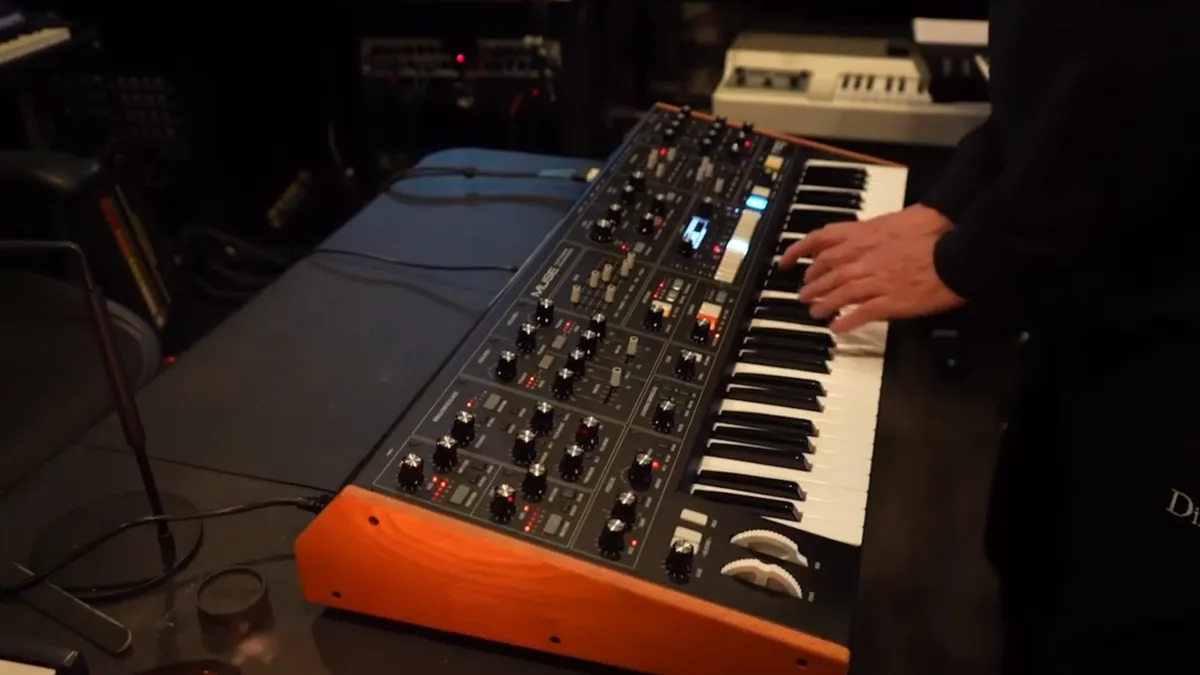
gear. Candyland, where drums and some instruments were recorded, is a feast of vintage keys
including an Optagon, Hammond L100, Clavinet
D6, Prophet 5 (from Aja), Fender Jaguar organ,
Hohner E7 clavinet, Roland Juno-6, 140 and 200A
Wurlitzers, Hohner Bass 3, Farfisa organ with a
Partner 14 Drum Machine, Crumar organ, and
a ’70s Realistic synthesizer by Moog, as well as
Univox Hofner bass, Melody Maker bass, and an
electric sitar given to Leonhart as a wedding present from Walter Becker. Leonhart records in Logic,
and uses outboard gear including a UA M610 preamp, Shadow Hills Quad Golden Age, Altec 1591a,
Teletronix LA2A, and Neumann U87 and KM84,
JRS-34 Cloud and Shure SM57 microphones.
Ultimately, the bang is in the buck, Sunken Con-
dos sounding extremely rich, nuanced, and clean.
Fagen’s vocals are especially relaxed sounding, and
the intimacy of Leonhart’s drum work (credited as
“Earl Cooke, Jr.”) imbues the entire album with a
cozy R&B groove.
Sunken Condos
sounds very warm and
intimate. Was there a sonic template for
the album?
Fagen: I’ve always looked for a natural sound. I
like a fairly dead room; I don’t like a big roomy
sound. It was recorded mainly in two studios.
We did some horns in the bigger rooms, but I
think it’s really just a matter of taste and just
knowing what mics to use. Using tunable key-
boards are important. They sound more natural
than synthesizers.
Was recording in smaller rooms about getting
the most out of limitations?
Fagen: Pretty much. Even though Steely Dan
recorded in the greatest studios, we never
needed really high-tech gear. We always had
some state-of-the-art stuff, but as far as instruments, we used traditional instruments for the
most part. Getting a good sound is really a matter
of taste, if you want to know the truth. It’s not so
much about equipment as knowing the difference between what sounds good, and what only
sounds good for a minute. You have to know
what’s going to sound good next week.
How does one develop those ears?
Fagen: I really don’t know. Walter and I always
used the jazz we heard on those records that
Rudy Van Gelder used to make for Prestige and
Blue Note; that was our template. His records
sounded clear and dry, pretty much. Although
they sounded very lively.
Do you have a home-recording rig?
Fagen: Yeah, in the beginning, I gave Michael
some really cheap demos made in GarageBand. I
play everything myself without time correction.
I try to get the good groove. I just use whatever
sounds come with GarageBand, then I [compose]
a drum track and a bass track and a couple keyboards and something that sounds a little bit like
a guitar and something that sounds a little bit like
a clavinet. I do a little rhythm arrangement of the
tune. Then Mike played drums to my arrangements, and we had a drum track. Then we started
replacing the parts with real basses, and real
pianos, and Rhodes pianos.
What’s your process for tracking vocals?
Fagen: If I write a song, I don’t practice it; I work
it out in the studio. I sing the song for the first time
in front of an engineer. And then kind of work out
how I want to do it by doing takes. I can see why
someone if they’re good at clicking a button and
recording themselves, that’s a good way to do it. I
like to have an engineer there. I do a lot of takes.
Michael, how did you record Donald’s vocals?
Leonhart: Donald needs, in the digital realm,
absolutely zero latency. That’s an issue with a
lot of digital gear. We were recording the vocals in Logic; Pro Tools to me has a better system for
latency; it’s been designed that way. With Donald,
we had the mics set up and the levels were good so
I would just hit record and make sure nothing was
going over [into the red]. A key part of the chain
was the Metric Halo LIO-8 A/D converter; I can’t
say enough about it. The Metric Halo provided
zero latency compared to other pieces. The whole
chain was the Metric Halo, the [Teletronix] LA2A,
his U87, the UA 610 preamp, and Mogami cabling.
Then it was the mix. Just the right amount of
groove, then a sense of pitch to give him something to latch onto. I approached any vocal guidance as a lover of his music and his lyrics. He had
all the melodies set, and he would sing and I’d
use my best bedside manner, there would come a
point when he needed to do more takes, or I might
recommend a melody line. We developed a sense
of trust. And I think he sang his ass off.
What kind of effects did you use on his vocals?
Leonhart: We used some Altiverb plug-ins on vocals in mixing to an SSL board, but we always track
vocals dry. We used a little compression from the
Teletronix LA2A, just kissing it. In mixing, we also
had an EMT 250, a Bricasti Design reverb, and a
Studer 2-track for slap. The UA only goes down to
-10, so I used an in-line pad, which colored it, but for
non-super-high volume, it’s great. We also had a
Shadow Hills Quad GAMA with the mod to switch
between nickel (Focusrite), iron (Neve), and steel
(API) transformers. Donald’s first vocals went
through the Neve setting then we moved to Hirsh.
So Michael Leonhart is “Earl Cooke, Jr.”?
Fagan: Yes, that’s his nom de musíque. Michael would get behind the drums sometimes at Steely
Dan soundchecks and I thought he had a great
feel. So when we started doing this record, I
gave him one or two tracks to play on, and he
sounded so good that he ended up doing all of
them. Being a jazz musician from a young age, he
has this little shuffle in his feel, very old-school,
and relaxed. That really made the record feel like
it does.
Michael, how did you approach the drums on
the records?
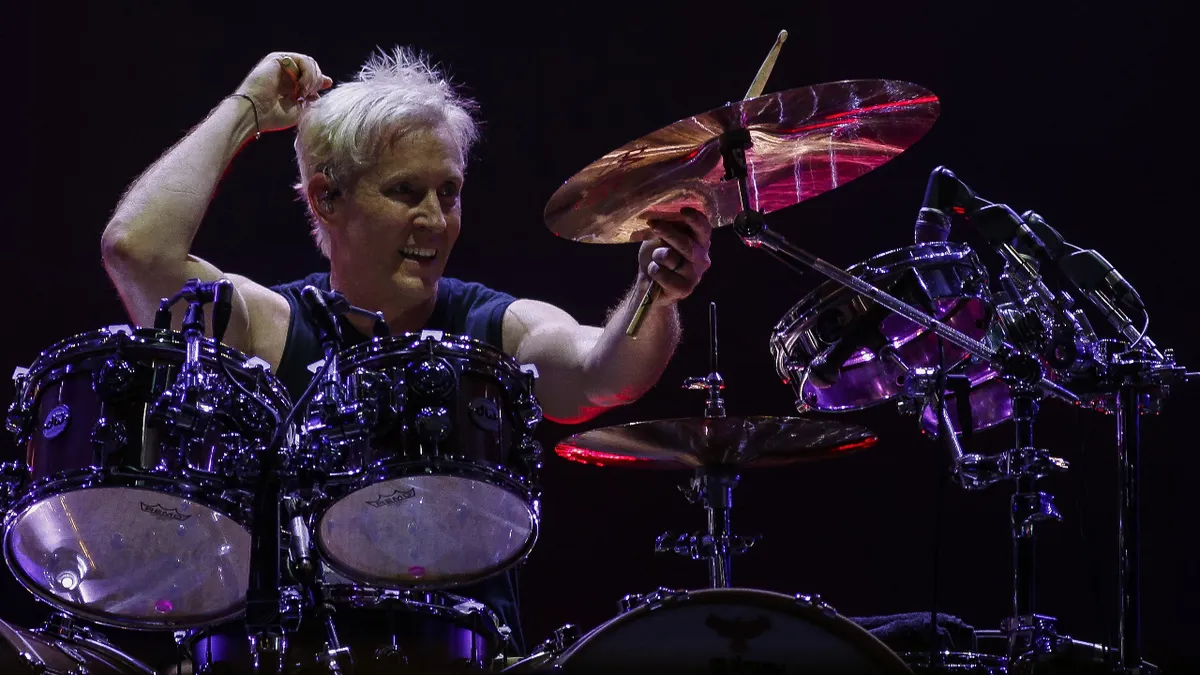
Leonhart: After choosing the right drums,
including a Ludwig & Leedy snare from Homer
Steinweiss, and 1970s Ludwig drums I borrowed
from Sean Lennon, we started recording what
we thought we would be demo drum tracks.
Sometimes Donald would say, “It sounds great,
do another pass and send it to me tomorrow.” I would do the takes, the feel would be there, but
the sound wasn’t right. There was no rush; Donald is never in a hurry. I am a very limited drummer; I do what I do. But nothing is triggered.
Did you grid the drums?
Leonhart: Everything went to click. But Donald
is not looking to put everything on the grid,
because that feel is awful. Steely Dan was notorious in the ’70s and ’80s for trying to create the
perfect drum take. Moving these tiny increments
that 99% of the world can’t hear. But Donald is
open to anything to get that feel, that snap, but
we didn’t line up the kick drum in Pro Tools.
That’s not a human feel. So when I was engineering and cutting things up, Donald wouldn’t
look. The easy thing would be to snap it to the
grid. But Donald has the patience and the discipline to disregard the visual aspect. We recorded
the drums in my studio using a Shure SM 57 or
vintage AKG D1000E on snare, two Cloud JR34s
as overheads, Neumann U87 or Audix D6 on the
kick, an old MD421 on toms, and a KM84 on the
hi-hat, with no room mics.
The record is very intimate sounding.
Leonhart: That wasn’t a mistake; it took many
months to do it. We put up baffles for horns and
drums in my studio. At the brownstone, it was a
long space, so we put up gobos and cut the room
in half. We put up baffles and turned the control
room into an iso booth and used the live room as
my station to monitor. We did it very patiently
and made wise chess moves.
Did Donald enjoy working in the smaller
studios?
Leonhart: Well, after mixing the album, Donald
asked very sweetly, “Where does it go now?
What do I get? Tape or acetate?” I said, “We
can email you a hi-res version.” “What is that?”
he said. “What planet are you on?” Donald is amazed by those mesmerized, catatonic
people who walk down the street looking at
their phones.
Is recording in smaller studios about working
within the limitations?
Leonhart: Absolutely. I got used to asking myself,
“Is there any ambient noise, hard drive noise,
refrigerator noise?” When you’re in a huge
studio, that is usually taken care of. But even in
world-class studios, I’ve heard playbacks where
overheads are not on, or they’re clipping. Rookie sh*t. People get sloppy. Working in smaller
studios takes more concentration; you have to
be very careful to not f*ck it up. For example,
today in my studio, it’s raining; I can’t record.
So today we’d take a break until it stops raining.
Sometimes, it was a nuisance to have to check
everything in smaller studios and make sure
things were not losing fidelity. With Donald’s
albums, if there’s the slightest instance of things
smearing or being out of phase or cancelling,
it’s thrown out. We got rid of an entire seven-
horn arrangement on a Steely Dan recording
because the flutes were wrong. Knowing that,
you have to really be careful. That’s Donald’s
level. I am a fan of lo-fi and sampledelia, or The
Band albums; there’s an honesty and integrity
to that. But with Donald, that’s not the medium.
The medium is getting this extremely rich,
three-dimensional thing. That’s been the nicest
compliment, people saying this is rich and full
and tight sounding.
Donald, do you miss the days of working with
analog consoles and tape compared to digital
and its speed?
Fagen: The greatest thing about tape was how
a really experienced engineer knew how to
saturate the tape when recording drums or
guitars to fatten everything up. It was a very
delicate thing. You don’t want to sound distorted, but you do want a little of that saturation that you get using analog tape. Someone
like Phil Ramone knew how to do it; Elliot
Scheiner learned it from Phil. It really made the
drums sound great. Everything sounded a little
warmer on tape. But because we did so much
overdubbing, after a while the oxide started to
come off and we had a lot of errors. We had a
lot of trouble with tape; it would come off cause
we played it so many times! So I actually like
working in digital.
How do you feel about the notion of work-
ing at smaller studios and being more self
reliant?
Fagen: Well, I think it makes sense. You can re-
ally set up a little studio in your house; that’s obviously the way to go. It’s too bad, ’cause I love
recording in [pro] studios. I love the differences
between them. I loved working at A&R and Automated Sound and all these great studios that
had these beautiful-sounding rooms and I loved
the way they smelled and the wood! It was fantastic. And also, I like having a second engineer,
and someone to go get coffee and all that stuff!
[Laughs.] But that’s not happening now.
Leonhart: I tell people to surround themselves
with experienced people. When you’re with
someone who has a lifetime of experience,
that’s how you learn. I can’t record a 30-piece
orchestra; I would be sh*tting my pants. So I
know when to call someone in. Studio gear is
only made to further a great idea. I like gear, but
I prefer a great idea, something you can’t buy
or put your hands on. It’s great to understand
the gear, but do it with humility, realizing that
there are people who only do this stuff. That’s
their passion. The guys at Daptone and Truth
in Soul learned by failing and going to the guys
from the ’60s and ’70s. You learn it by making
mistakes with people who can show you how to
correct it.