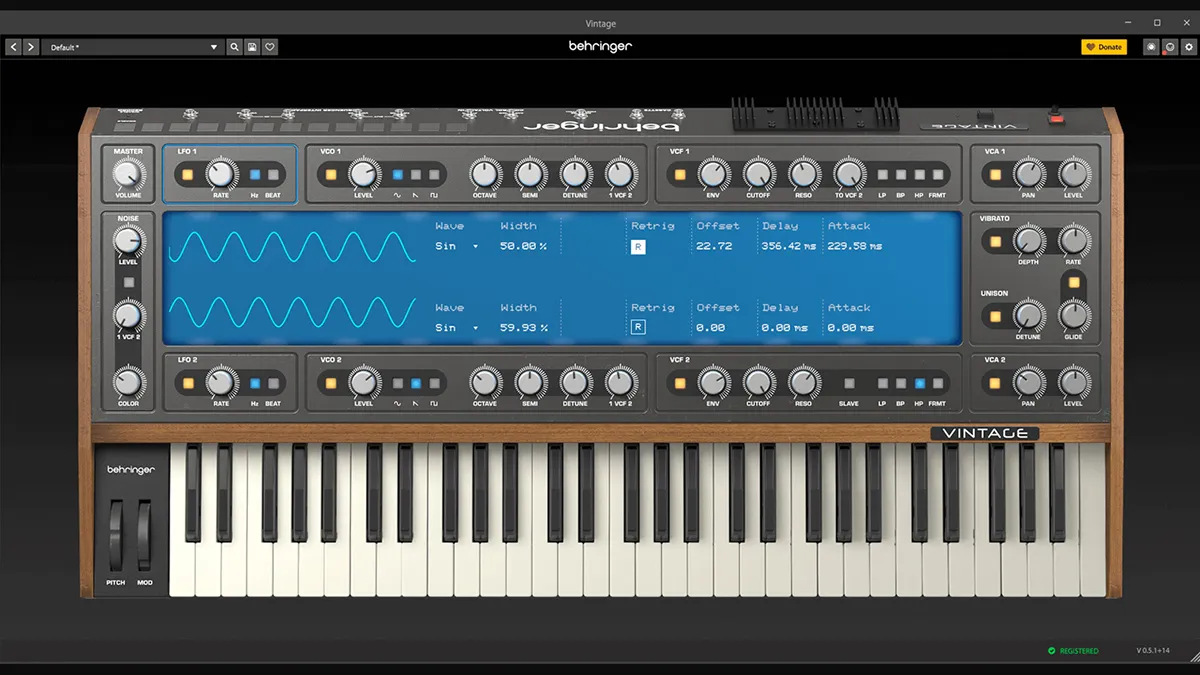
Fig. 1. In Celemony Melodyne Editor’s GUI, individual notes of a melody can be dragged up or down graphically to change their pitch.
BY MICHAEL COOPER
Killer music productions start with great arrangements.
On the other hand, if you find yourself struggling
to improve a seemingly unmanageable mix, the
song’s arrangement is probably the culprit. No
amount of mixing will fix a broken arrangement—but
that doesn’t necessarily mean you have to dump the
whole thing and start over from scratch. A little nip
and tuck can give your mix a fresh coat of paint. Try
these six arranging tips.
Kill Your Sacred Cows
You may love the five intertwining guitar parts you
labored so hard to record, but do they all really help
your song? Generally speaking, having more than
two melody parts (including the lead vocal) voicing at
once is a recipe for sonic confusion. Remember that
most listeners focus on the lead vocal on a recording.
Anything that distracts attention away from that
“money track” weakens your mix, so make sure every
part supports it and makes the song stronger. No
matter how much you may love a particular track, you
must remain objective about how it contributes to—or
detracts from—the entire arrangement. Ferret out
musically unimportant tracks and be ruthless with
their mute buttons.
Breakdown Here
A good place to get fast and loose with muting tracks
is during a musical break or on a verse of your song.
Try paring down the tracks to just drums, vocals, and
either bass or guitar, even if only for a few strategic
bars. Alternatively, take the drums completely out of
the mix until the next section of the song hits. This
arranging technique is called a breakdown, and it’s
very effective in creating a contrast between song
sections and providing a respite from a constant wall
of sound. Nashville-based session players refer to a
breakdown as “clearing out” the song section, and
it’s an apt colloquialism—sometimes having too many
tracks play at once can muddy a song’s waters and
lessen its impact.
Double Up
It might sound too wimpy to have a single guitar
part accompany bass, drums, and vocals, but that
also might be all that the song’s arrangement needs.
Resist the temptation to clutter the production with
additional tracks simply to make it sound more full.
Instead, make the single guitar part sound bigger by
doubling it. You can do this by setting up a Haas effect
with a modulating delay (see last month’s Techniques article “Use Psychoacoustics to Craft a Huge-Sounding
Mix” for more details), but you’ll get an even bigger sound
by playing the same guitar part again and recording it onto
a new track. Make sure your timing for both tracks is pretty
much locked as much as possible; very slight differences
in articulation are okay. Hard-pan the two guitar tracks left
and right, respectively, for a huge, double-tracked sound.
Use Chord Stacks
An alternative to double-tracking is playing chord
stacks. Instead of having one rhythm guitar play all the
notes in each chord, divide and conquer: Play the root
and fifth, for example, on low strings on one guitar track
and the fifth and third on higher strings on a second
guitar track. Hard-pan the two guitars opposite each
other. The effect will sound like your head is placed midway
between lower and higher groups of guitar strings—
big and wide! By splitting a sole vamp into two halves
this way, you retain your arrangement’s laser-focus simplicity
without sacrificing size and power.
Turn it Upside Down
If your piano part, for instance, clashes with the lead
vocal at a specific point in your song, but you know it’s
playing the right chord there, try inverting the piano’s
chord. For example, say the lead vocal sings a C note
where the piano plays a Cmaj9 chord. If the B and D
notes in Cmaj9 are played in the same octave as the
lead vocal’s C note, dissonant minor and major 2nd
intervals will form between the piano and vocal tracks.
Unless you like the dissonance, use a different inversion
for the Cmaj9 chord that places the B and D notes at
least a 7th interval away from the vocal’s C note. Look
for similar dissonances throughout your song, and
fix them by using different chord inversions where
necessary. Smart chord inversions are the key to a
harmonious arrangement.
Tweak the Melody
In the 11th hour of mixdown, you realize for the first time
that the lead vocalist sang an F# against a G7 guitar
chord. Yikes! Don’t bother re-recording the vocal track,
though. Use Celemony Melodyne Editor plug-in (see
Figure 1) during mixdown to transparently shift the pitch
of the F# note up or down a semitone to fit the guitar
chord. MOTU Digital Performer users can enlist that
DAW’s outstanding pitch-automation function to do the
same thing.