Why less is more, but talent is everything
 |
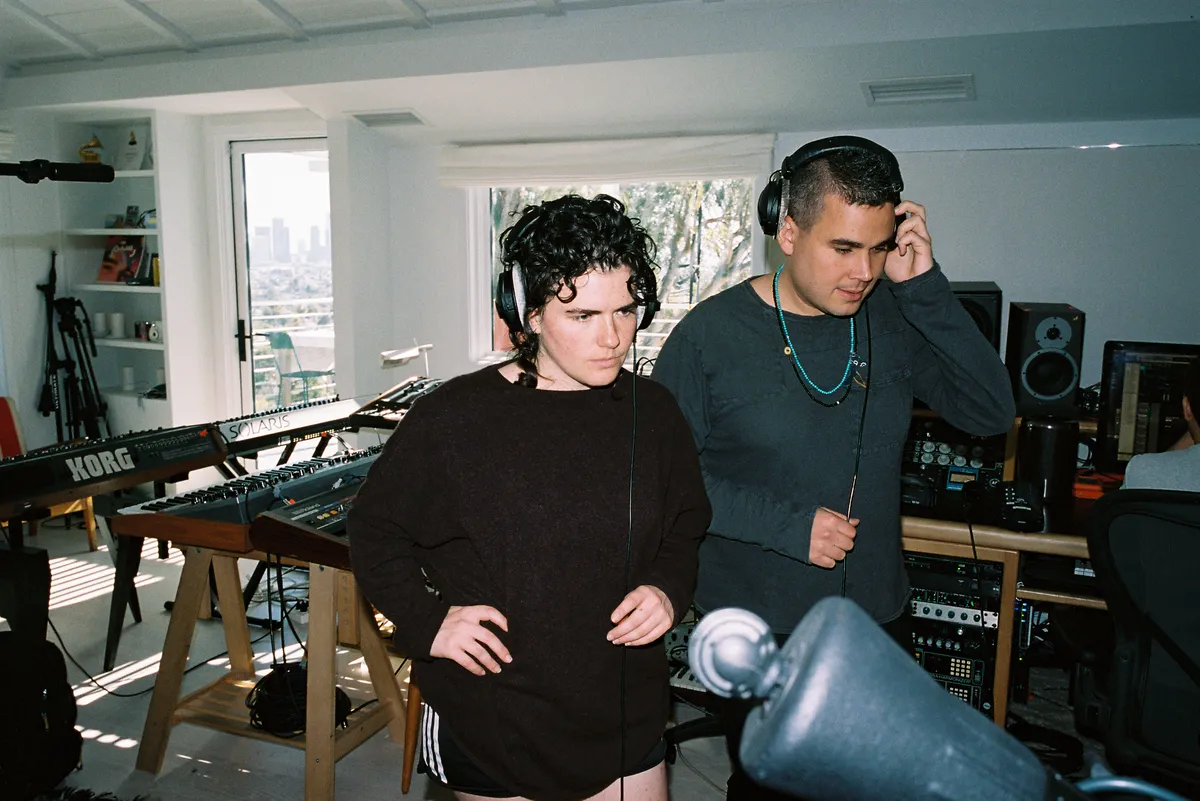
Chiccarelli with singer/songwriter Keaton Henson at Sunset Sound in Los Angeles. |
It’s hard to imagine anyone with a more diverse
collection of successful major album and singles
credits than Joe Chiccarelli. Having jumped
at the chance to engineer with Frank Zappa in
his just-getting-started days, he hit the ground
running and has been moving along at a great
clip ever since. The list of recordings bearing
this multiple Grammy winning producer/
engineer’s soulful touch is as long as it is broad.
From Etta James to Alanis Morissette, from U2
to The White Stripes, Chiccarelli’s devotion
to building creative mixes, showcasing stellar
voices, and crafting enticing aural atmospheres
points to the diversity of his own outstanding
talents as an engineer, musician, and producer.
Chiccarelli has just finished up a number
of projects, and iTunes and radio airwaves
are buzzing with his signature production
sound and creative influence. On some of
these albums he’s the sole producer, and on
others he’s sharing the role. Producing the new
Alanis Morissette album along with composer
and producer Guy Sigsworth (Madonna,
Seal, Bjork), has given him new insight on
collaborating in the studio, and his efforts
are currently riding high on the charts with
Morissette’s “Guardian” and Jason Mraz’s new
single “I Won’t Give Up.” Electronic Musician
caught up with him while he was on a break
from the action in Los Angeles. Always talkative
and eager to share, he was happy to discuss his
personal recording philosophy and the technical
and performance particulars of albums you’ve
heard or will be hearing soon.
You’ve been credited by many with having a
great propensity to showcase amazing vocal
performances in your work. There is a real
up-close and personal connection that seems
to be going on from the singer to the listener
on many songs.
A song is only as great as the singer. I’m really
old school about that. A great singer makes your
job really easy. In a sense that’s the first and
foremost thing that you hear. Maybe you hear
a great guitar hook in the intro of the song, but
if the vocal and the story don’t carry it through
the three-and-a-half minutes or whatever
it is, you’re not interested. It’s still all about
that, and recently I’ve been very lucky to have
worked with such great singers such as Alanis
Morissette and Jason Mraz, but also with others
like Elton John, Beck, and Bono. These are
people who are just masters of pumping big
emotions through a microphone. I think it’s
the key, getting it so that you’re committed and
connected for that entire vocal. Sometimes
it’s a simple thing, just one magical take. Jack
White can be the master of that; when he’s
on, it’s really simple. Other times, it’s about
crafting a vocal performance. Jim James from
My Morning Jacket is great at knowing how
to layer his voice and use echo and effects to
deliver a beautiful emotional blanket. Alanis
is such a pro after so many albums; I mean,
she just gets up to the microphone, and two
or three takes and you’re done. She’s got a
beautiful tone, and it’s pretty easy that way.
What do you do to as far as your
preproduction process before tracking
sessions?
It’s something I definitely take a lot of time
with. I make sure that songs are in the right
key for the singer. However, sometimes it’s a
matter of doing the opposite—putting the song
in a key that may not be the most comfortable
but provides them with a different tone. They
may have a big, strong voice that’s really full,
and if you put them on the lower edge of their
range, it can make them sound maybe softer
or more vulnerable. From there, it’s choosing
the arrangement and instrumentation so that
it doesn’t fight the vocal, choosing a guitar
sound that doesn’t swallow the singer. It’s easy
to get a big guitar or a big drum sound, but
I’m always keeping the singer in mind. When
I’m working in rehearsal for preproduction
the singer is there and singing along; same
thing goes for when I’m tracking live, and if
the singer isn’t there, I like to have a guide
vocal that I can build things around. It’s really
important to me that the singer be the focus,
no matter what the band is about, soundwise.
On Alanis Morissette’s new album, Havoc
and Bright Lights, it must have been an
unusual way to work, with Guy Sigsworth
programming the songs first and then you
working backward with the live tracking…
It was a challenge, indeed; it was almost like
the “remix” album was done first, having sort
of reverse engineering going on. It was actually
kind of fun; she was great, in that she gave
me a lot of freedom. I used several members
of her band but coincidentally a lot of them
were people that I’ve worked with before
on other projects as session musicians. The
tracking sessions included Victor Indrizzo,
the L.A.studio drummer who also plays in
her band; Sean Hurley did most of the bass
playing along with Paul Bushnell; Dave Levita,
who is her live guitarist, played almost all of
the guitars on the album. Lyle Workman, an
L.A. session guitar player and film composer ,
did a lot of the big rock guitars as well. These
are people that both Alanis and I have great
relationships with. They understand her and
what she likes, and that kind of made it easier
for me.
You seem to have a relaxed way of getting
involved in the songs, of inserting your
influence into the arrangements and
production values—almost like you are a
member of the band.
Most artists come in with an idea of what
they want; it’s rare when someone doesn’t.
No matter what the credit reads it’s always
an equal collaboration with the artist.
Truly, It’s almost always the songwriting
that determines where an album is going
to go. Sometimes we’ll do a number of very
different versions, just trying to find the
most honest place for the song. On [Jason
Mraz’s] “I Won’t Give Up,” we did a very
simple acoustic version, which ended up
being the current single version out now,
but also we did a blue-eyed soul, Memphissort-
of-feeling version; and we did a much
more uplifting pop ballad version of the
song, as well. You certainly want to serve the
song, but at times you also want to serve the
audience and the record company and a lot
different people, so you’ll try different things
to see what will have the most honesty and
impact.
There usually seems to be a very prominent
percussion sound going on up front with
the vocalist in your mixes that works very
well. Can you elaborate on that?
Groove is really important, no matter what
the music is; it’s the vehicle in which the vocal
rides. It’s like the train or the automobile
underneath it, so I really to make sure the
groove kicks the vocal in the butt, that it
percolates it, keeps it alive. Whether it’s the
syncopation with the kick drum, or if it’s
something more intricate, I definitely pay
attention to that.
You learned your craft in an era when
commercial studios were more vibrant, and
you gained knowledge in that community
atmosphere. What can you tell people who
are working in more isolated personal
setups; how do they avoid “cabin fever”?
You know, that’s really a good question!
That’s easy to get caught up in, even if you’re
working in a commercial studio. The home
thing…for me, it’s tricky. It’s nice having the
“no pressure” environment where you can
experiment and try things that you might
not if you knew that you only had a certain
amount of days or budget restrictions. It’s
easy to get locked in routine, though. When I
was doing the album with The Shins, Wincing
The Night Away, James Mercer had worked
on his own on the album for a while before I
came in. He needed someone to bring in some
objective opinions. I spent probably three
months working on that record to bring an
outside perspective. I just kind of showed him
some possibilities and options that he couldn’t
see himself, because he was working in a very
isolated environment on his own.
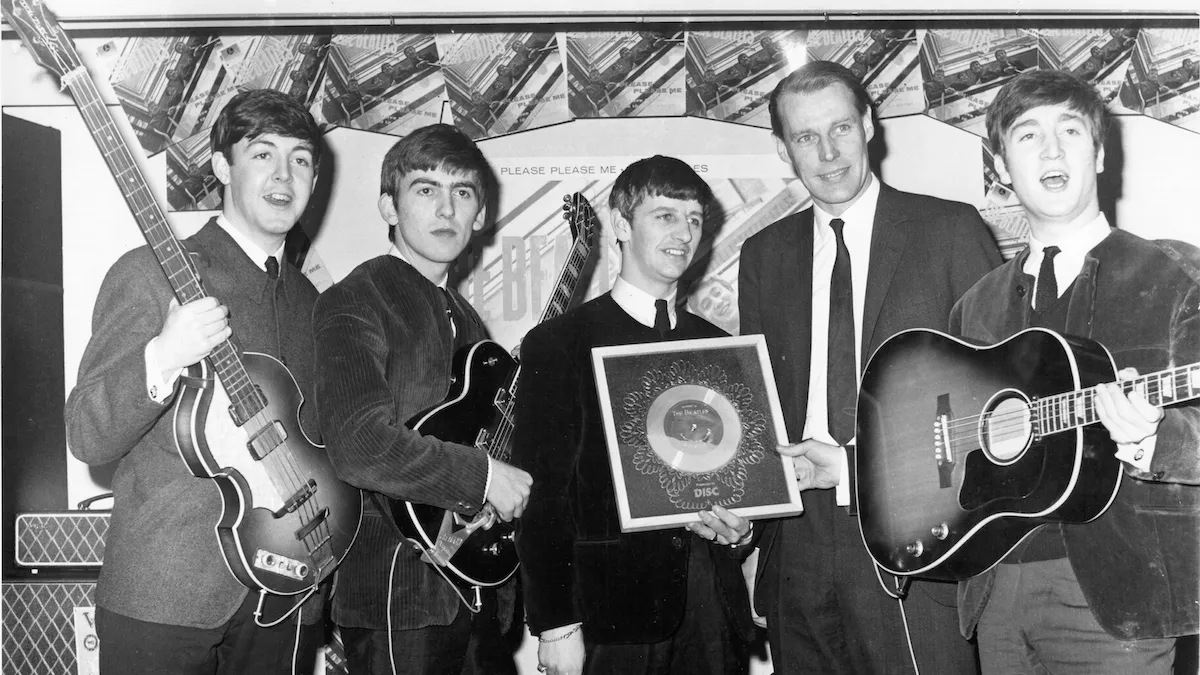
It doesn’t always work with other art
forms, but certainly some of the best music
can come from great collaborations. You look
back and whether it’s George Martin and
The Beatles, or Gus Dudgeon and Elton John,
or Lanois and Eno with U2, those are great
collaborations. Having somebody there to help
you see something that you missed is a great
asset. I even find that myself. I’ll be working on
something for months and somebody will all of
a sudden come into the room and hear a track
for the first time. A great A&R person can be
a major asset to me; someone who can remain
objective throughout the whole process. He
or she may say something like, “I know you
guys are really loving this track, but the groove
in the verse isn’t as great as the groove in
the choruses.” Or maybe, “Do you think this
one section you have as a breakdown, maybe
it’s too long or it doesn’t need it at all.” It’s
amazing to have someone come in and give
new perspective on something you may have
been working on for months and you can’t see
it clearly. Objectivity is really a wonderful gift.
Having stepped right into working with
Frank Zappa early in your career, what
ideas did you learn from him that you find
you are still using today?
The best thing that he taught me is that there
are no rules. He tried to break every rule
wherever possible. [laughs] The minute you
box yourself into a certain way of working,
you’re dead. I try to embrace change and
challenge.
What do you look for in demos when
you are starting a project?
It’s different for different kinds of music;
obviously, from somebody who is doing
something that is beats driven, I would
want something that has a major sense of
what the groove is. For a singer/songwriter
project, I want demos that are very basic.
I’m happy with a very lo-fi iPhone recording
of something that’s just guitar and voice or
piano and voice. That way, it leaves me room
to imagine all of the possibilities. Occasionally,
people come in with fully formed demos that
sound great, and you think, look, don’t change
anything, except here in the bridge where you
kept the same color going for the rest of the
song; maybe it could take a left turn, maybe be
more dramatic. I’ll just be tweaking them up a
little bit. Certainly, the home-recording thing
is great; you can make demos that are record
quality.
Can you give us some advice on producing a
home/personal-studio recording?
On a recording level, I think about space.
People are so keen to try all of their tricks
and layer things to such a large degree
so that there’s no space in the recording
whatsoever; it’s just inundated with overdub
after overdub. I get many recordings where
there’s like a hundred tracks of things on
there. You know, you can get by very well
with just two great guitar tracks rather than
forty of them layered in the same range
and same sound; as a result, it just sounds
small. Sometimes two well-recorded, wellorchestrated
guitar parts sound way bigger
than forty tracks all layered in the same
range, same tonality, same guitar; they all
kind of cancel each other out.
That’s certainly a technique that has served
the Rolling Stones well.
There’s a lot to be said for that, and Keith is
the master of really coming up with one part
that slowly evolves over the song, and it kind
of incorporates those five guitar parts you are
thinking of, but those parts happen at different
moments, helping build the song and taking it
to another place.
How do you go about tracking in the
studio? Do you like to have a live feel?
Tracking-wise, I definitely enjoy when
everybody is in the same room at the same
time, feeding off each other; there is that sort
of “X factor” that happens when you get a lot
of great players in a room. If I’m doing bands,
I don’t like to layer the records; I like to build
it as a band. All great bands kind of fill in all
the extra pieces by playing together. That’s
the magic of a band like U2. Sometimes it may
seem that the parts are very simple, but when
you put it all together, it’s like this chemical
explosion. Getting people in the same room
is important. The Café Tacuba record I’m
working on is being done in studios and clubs
and even restaurants. We’re inviting guests,
60 to 150 people to sit in the room with them
while they’re playing. It’s still a recording
session, the band is wearing headphones
and things are miked up the same way as
in a studio, but there’s a select audience for
emotional support and feel. It’s a challenge,
of course, with a P.A. system in the room and
there may be other distractions, but there is
something about having that extra energy
that’s inspiring.
What’s coming up with you?
Well, I just finished an album for this really
great U.K. based artist named Keaton Henson;
he’s a singer/songwriter. The songs are very
intimate, stripped back, very vulnerable, and
personal; he sings very quietly. Emotionally,
the songs are very strong. I mixed the
recordings up at 25th Street Studios, Dave
Lichtenstein’s studio in Oakland. He’s got a
great-sounding room and console. I’m tracking
another band up there this fall—Long Beach
based Hellogoodbye, who had a huge hit a few
years ago on Drive Thru Records..
Later in the year I’m working with Bernard
Fanning, the former singer of the huge
Australian band Powderfinger. As well as
being in the midst of co-producing this record
for Café Tacuba, a really amazing Latin band
that’s been successful for 20 years.
Can you tell our readers something they
may not know about you?
Like everybody’s career, it’s up and down. You
have good years and not-so-good years. I’m
always pushing myself to see what’s next and
what’s new. It’s important to me to be fresh;
I hate getting into routines and not feeling
creative or like I’m repeating myself. I’m also
challenging myself designing a couple of pro
audio products, and I’m working on a music
TV show. I always think of those actors that
do Broadway plays for years, and their ability
to make it fresh every night is amazing to
me. Fortunately, making new records with
new artists every few months brings a new
approach, but I certainly still want to bring
new challenge and perspective to everything
I do.
Craig Dalton is a regular contributor to
Electronic Musician.