Rodrigo y Gabriela
Mexican duo team with Peter Asher and Hans Zimmer to craft a dazzling guitar showcase
Interview extra and outtakes
By Ken Micallef
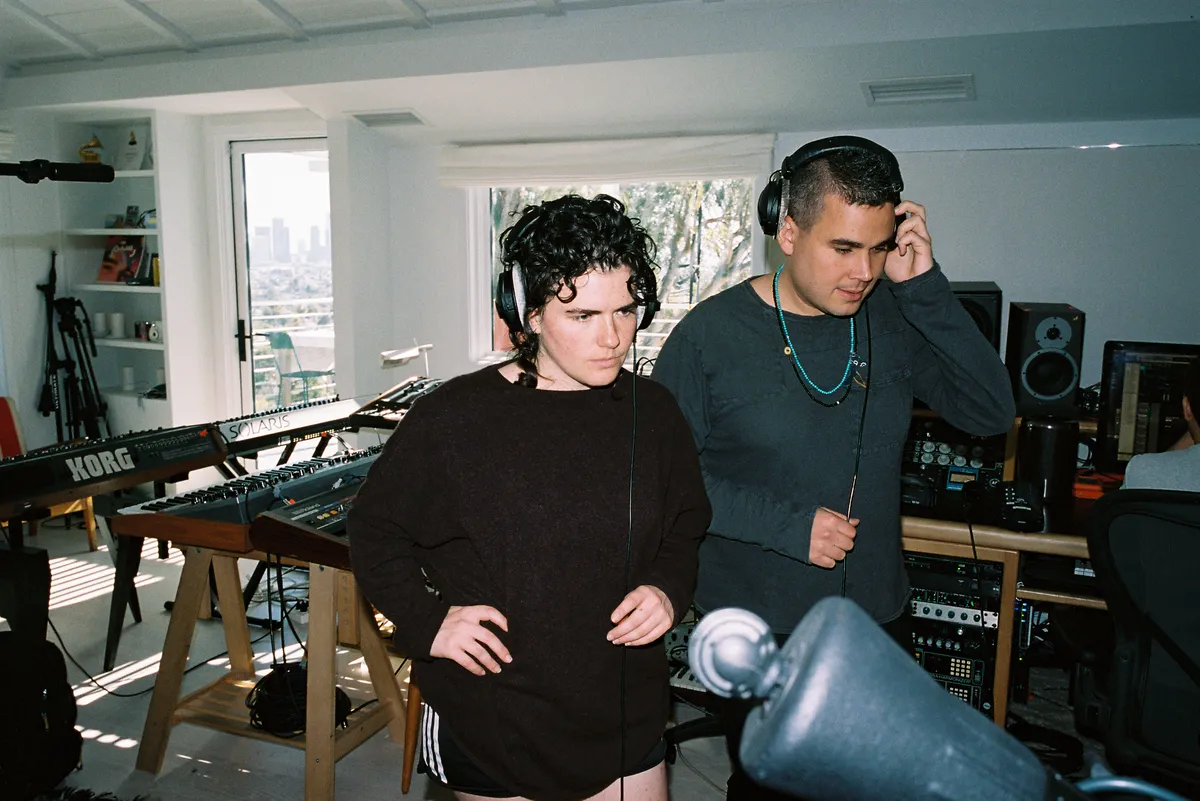
Basic guitar at Rodrigo’s Lumbini studio in Ixtapa, Mexico
Rodrigo: On a few songs we had just one mic per guitar, others we used three mics per guitar. We wanted to have different opportunities for the mix, so we could change the sound if we wanted. We recorded in two different rooms in my studio so we had two different rooms for guitar. One room is a little bit brighter than the other one, so sometimes we had two microphones, one close on the guitar and the other mic getting the room sound. And both were DPAs. We changed positions all the time. It took us a while to record all the guitars.
Abdala studios http://www.abdala.cu/default.aspx
When we went to Cuba at Abdala Studios we did guidelines for the orchestra to follow. But once we got that down, we returned to our studio and tracked all the electrics and acoustic guitars. (Lapsteel, steel string guitars.)
We began in June, with Alan Wilson arranging music in March. This was between tours, music for films, it was a busy year. We did Pirates of the Caribbean 4 with Hans Zimmer, and Puss and Boots.
How did they develop arrangements?
We practiced with the orchestra for four days. Then we recorded the rhythm base, just the two percussionists, along with piano and bass. We were playing as well so they could follow us. The only thing that remained was the bass percussion and piano. Once we got the right take, we called the brass players in, and they played on top of it, then the strings. We layered everything once we had a basic idea of which of the takes we were going to record to. We couldn’t really line everything up in Pro Tools, because everything was lined up in a different way. You can do that with a rock band, but when you have this massive orchestra it’s more complicated to line things up instrument by instrument.
With the orchestra, we had to sit down with them and work it out the different structures. While they were recording in studio A, I was recording with Gabriela in Studio B so they could hear us. We recorded it all together, then replaced our guitars at my studio in Mexico.
Engineer Gabriel Benitez Herrera
I have spent 20 years recording all sorts of albums – even recordings for film and television. Some artists that I've worked with include: Polo Montañez "Guajiro Natural" and "Guitarra Mia" as well as a Latin Jazz Tribute to Emiliano Salvador. Some more examples: Latin jazz album "Luna" by Rolando Lunas, Mario Rivera "El Negrito Bailador", Los Van Van "Chapeando." I've been involved with nearly all of the albums from salsa artist Isaac Delgado – in collaboration with engineers like Jose Mendoza from Venezuela and John Fausty from the U.S..
In terms of the film projects I've worked, there was a French/Cuban co-production called "Una rosa de Francia," a soundtrack of a musical that was a tribute to Beny More and right now I'm working on the mixing of a film called "Irremediablemente" - it's a Cuban/Spanish co-production. I have worked on plenty of other projects as well if you want a full list, I can send it.
Peter Asher in Malibu
Alex Wilson was the arranger and he’s a fan of Cuban music and knew a lot about the players in Havana, he was able to interpret a lot. We knew we wanted to find the best musicians that could play along with the great music of Rod and Gab. Alex was doing arrangements so we knew we were in good hands there.
How different to a standard LA soundtrack orchestra?
There isn’t a standard soundtrack orchestra. With Hans, for each movie hewill have a particular shape of orchestra. I have seen his sessions where it’s all cellos and basses, no violin and violas, a setup like that. He understands the orchestra incredibly well, but it often won’t be the standard numbers that you’d expect to see when performing a symphony. He uses interesting flavors. In each film, Hans is looking for a certain little combination of notes that will give it a particular theme he’s looking for, and addition a particular sound. He’ll spend a lot of time thinking about how a certain drum should sound to suite the scene and the movie for example. When he gets it that establishes the flavor for the entire soundtrack. That’s why all his soundtracks are so different.
Vocal vs instrumental?
You always have this funny feeling, when do we put the vocal on? That is lurking in the back of your brain as many times as you tell it not to. You have such a traditional work ethic that you get the track into shape and okay, now, how many vocal takes should we do, should we comp the vocal? The equivalent to that is Rod’s lead guitar part. If anything, one thinks of Gabriela’s part as something you will fit into the rhythm section. She is the leader of the rhythm section in many respects. And then when Rod has his lead lines, it’s like the vocal. But it’s not the same and you’re not worrying whether is someone is getting the lyrics across, can you feel what they are trying to tell you, can you make out every word? You’re not worried about words, you’re worried about accuracy and rhythm and intensity and the kind of emotion you can get from playing a line with the right flourish. That is not unrelated to singing a line with the right emotional intensity but it’s a different process. So my only worry was can I hear Rod and Gab clearly enough and then is Rod playing it perfectly. But he will never let it out until he’s done that. He usually plays it perfectly every time.
Abdala equipment
PROTOOLS HD2 vers. 8.0.1 (Power Mac G-5 Dual 4GB RAM)
Surface: 153 m2 .Volumen : 1,025 m3. Three isolated rooms in addition to a live room and a Steinway & Sons Grand Concert Piano D Series, constructed in Hamburg. This studio was originally conceived for maximum quality analog recordings and afterward, digital technology was incorporated. Now it offers services of recording, editing and sound mixing in any format.
Studio monitors
JBL 4412
AKG 270/271 Headphones
Peripheral equipment
Lexicon 480 LARC, Lexicon 300, Lexicon PCM 90, Lexicon PCM 80, TC electronic M 2290, TC electronic M 2000 Wizard, Eventide DSP 4000, Roland SDE 330, Yamaha SPX 990, DBX 160s Tube compressor, SummitAudio DCL 200 Tube compressor, Parametric Equalizer GML 8200
APHEX Compellor 320 A
APHEX Dominator II 720
APHEX Aural exciter type III, model 250
APHEX Aural exciter C2, with Big Bottom
APHEX Expressor
BBE 862 Sonic Maximizer
Apogee AD 1000
DAT STUDER D780
Deck casset TASCAM 122 MK III
Digidesign Sync
Digidesign 192 I/O Expanded (2)
Digidesign MIDI Interface
Drum mics
AKG D112 Y AKG 414 BULB
AKG 414 BULB (2) one for the top part and the other for the bottom part
SHURE SM81 on the Hi Hat
AKG 391 on the Tom Rack and on the Floor Tom
NEUMAN U 89 overhead
Piano mics
NEUMAN KM 184 (2) on the front part,
NEUMAN TLM 170 on the back side of the piano
NEUMAN U89 stereo pair on opposite corners
On the double bass
TELEFUNKER ELA 51 on the body part
SHURE SM 81 on the arm of the instrument
NEUMAN U 87 stereo pair on opposite corners
In the horns
Utilice los AUDIOTEKNIKA in the trumpets
NEUMAN TLM 193 in the sax
MICROTECH 92.1 in the trombone
Console: (with total recall) with Pro Tools and pre-amps from the table.
Percussion
AKG 414 BULB on the bells
SHURE SM 57 – in the jam block
Neuman U87 – stereo pair on opposite corners
In the congas
NEUMAN U87 in the congas
AKG 414 BULB for underneath the conga
Small percussion
NEUMAN U89
NEUMAN U87
MICROTEKCH UMT 70
I was using these mics according to the color of the sound that I wanted to achieve