By Kent Carmical | Wed, 01 Sep 2010
Are you aware that you can stumble into just about
any music store with less than $100 in your pocket,
and walk out with a small-diaphragm dynamic microphone
that can capture just about every sound you
need to record in your home studio? Whether that
choice is the venerable Shure SM57, or any number
of the cool under-$100 dynamics available today, you
can use that one mic to great effect if you simply
employ a bit of experimentation and creativity.
Love Your Dynamic
Unless your ears are as sensitive as a fruit bat, the typical
dynamic’s frequency response of 40Hz to 15kHz
can accurately reproduce any instrument in the
rock/pop/jazz arsenal. Its sweet proximity effect means
you can avoid excess EQ slathering simply by moving
the mic closer or farther away from the source, and its
typically tight cardioid pickup pattern rejects most
sound from the side and back. Most inexpensive dynamics
can also take insane amounts of volume without
overloading, and still deliver enough “airiness” that you
don’t have to boost high frequencies to the point your
track becomes an anti-personnel weapon.
On Vocals
The aforementioned proximity effect adds body and
warmth to vocal tracks when within an inch or two of the
capsule. There is also a presence boost right within the
vocal range that helps reduce mush and increase intelligibility.
Try to keep the singer as in front of the mic as possible,
because of the cardioid pattern’s off-axis rejection. A
pop filter is highly advised, as most small-diaphragm
dynamics have little or no internal windscreen. A compression
ratio of 2:1 with a –5dB threshold will help the
vocal track stand out, and cutting 300Hz by a couple of
dB will cure most instances of vocal muddiness.
On Electric Guitars
Even if your knowledge of mic placement is somewhat
less than your understanding of the Zoroastrian
religion, you’ll have a hard time getting a bad guitar
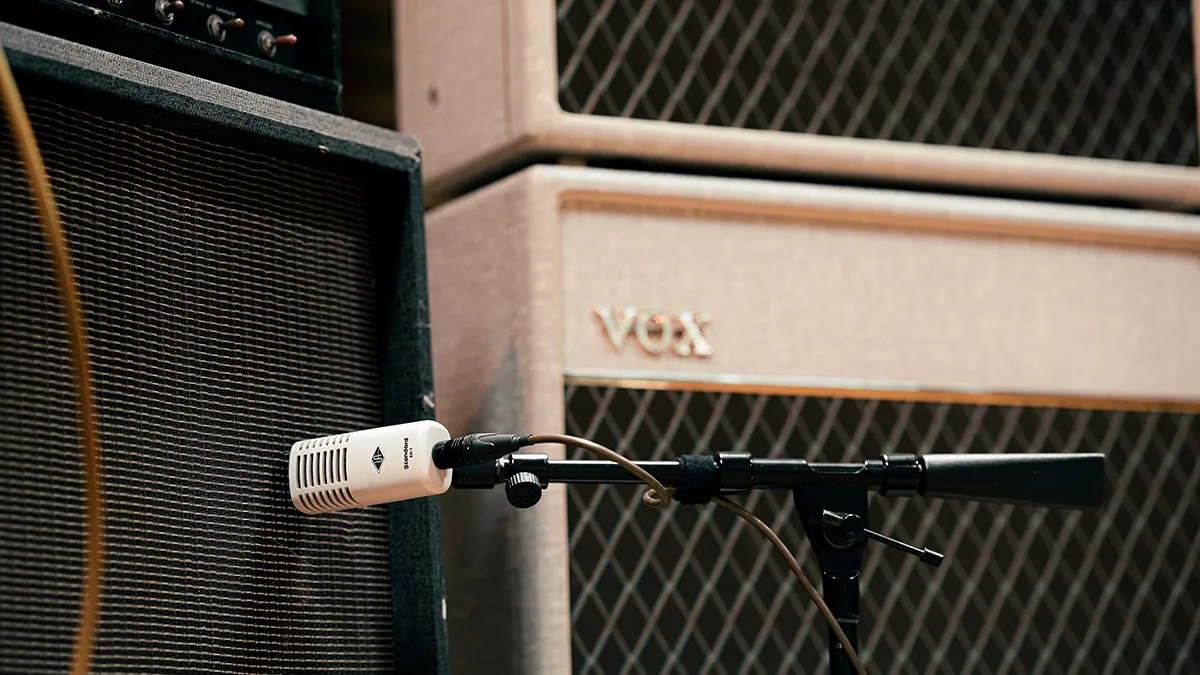
sound from a good dynamic. If you are lazy, just jam it
about an inch or two away from the speaker grille,
and crank the bejeezus outta the sucker. If you are
picking up too much treble and want a warmer tone,
simply move the mic away from the center, and closer
to the edge of the speaker cone. Backing the mic up
a foot or two will add room ambience, and, for a
change of pace, try miking the amp from the rear if it’s
an open-back combo. While you are limited to a singe
mic, modern DAW software can provide oodles of
tracks. I recorded a track of each mic setup, and
ended up with a wonderfully complex guitar sound
that would make Jimmy Page crap his velvet trousers.
On Acoustic Guitars
Acoustic guitar is a bit trickier with a dynamic. If you
are okay with a raw, lo-fi type of sound, simply point
the mic at the 12th fret, and about three or four
inches from the fretboard and bash away. For a more
complex and natural sound, record a track using the
12-fret setup just mentioned. Now, record a second
track with the mic pointed about four inches from the
soundhole. Then, record a third track with the mic,
level with your ear and pointing down to the body of
the guitar. When it comes time to mix, if the sound is
too boomy, bring down the soundhole track. Not
enough ambience? Boost the ear-level mic track.
Need more zing? Bring up the 12th-fret track. Cutting
500Hz will add more “transparency” without resorting
to boosting the high end and adding additional noise.
On Bass
A dynamic loves miking bass amps almost as much
as it does guitar amps. However, it works best
addressing the speaker at a near-45 degree angle,
rather than straight on. Remember that bass waveforms
need more room to fully develop compared to
midrang-y guitar, so place the mic ten to 12 inches
from the speaker to let the sound stretch out. A compression
ratio set to 4:1 with the threshold between
–5dB and –10dB should smooth the sound out
nicely. If you want more snap, boost 3kHz.
On Drums
While a dynamic mic would be my first choice to
record any individual drum in a kit, trying to capture the
whole damn thing with a single mic might be the height
of masochism. However, it is possible to get a decent
track, and here’s what worked best in my garage.
Put a blanket on top of the kick drum, and lay the
mic on it, pointed at—to put it bluntly—the drummer’s
crotch. This allows you to angle the mic towards the
snare if you are not picking up enough of it, or angle it
away if you are getting too much. A compression ratio
of 6:1 with the threshold set to –4dB works best,
because it adds punch while keeping the cymbals
from washing out.