Print Page
No Place Like Space: Porcupine Tree’s Steven Wilson on Remixing King Crimson in Surround Sound
3/1/2010
The release of several classic albums
from legendary progressive rock band
King Crimson has its longtime fevered
cultists all a-twitter. Titles are being
offered from the band’s Discipline
Global Mobile division via Inner Knot
distribution, and thus far include In
the Court of the Crimson King, Lizard,
and Red. The albums, in deluxe packages
containing CDs of the original
album mixes plus bonus tracks, come
with DVDs that include the original
audio content plus selected tracks in
MLP Lossless stereo (24/96), PCM
stereo 2.0 (24/48), MLP Lossless 5/1
surround, and DTS 5.1 surround; vintage
video clips are also included.
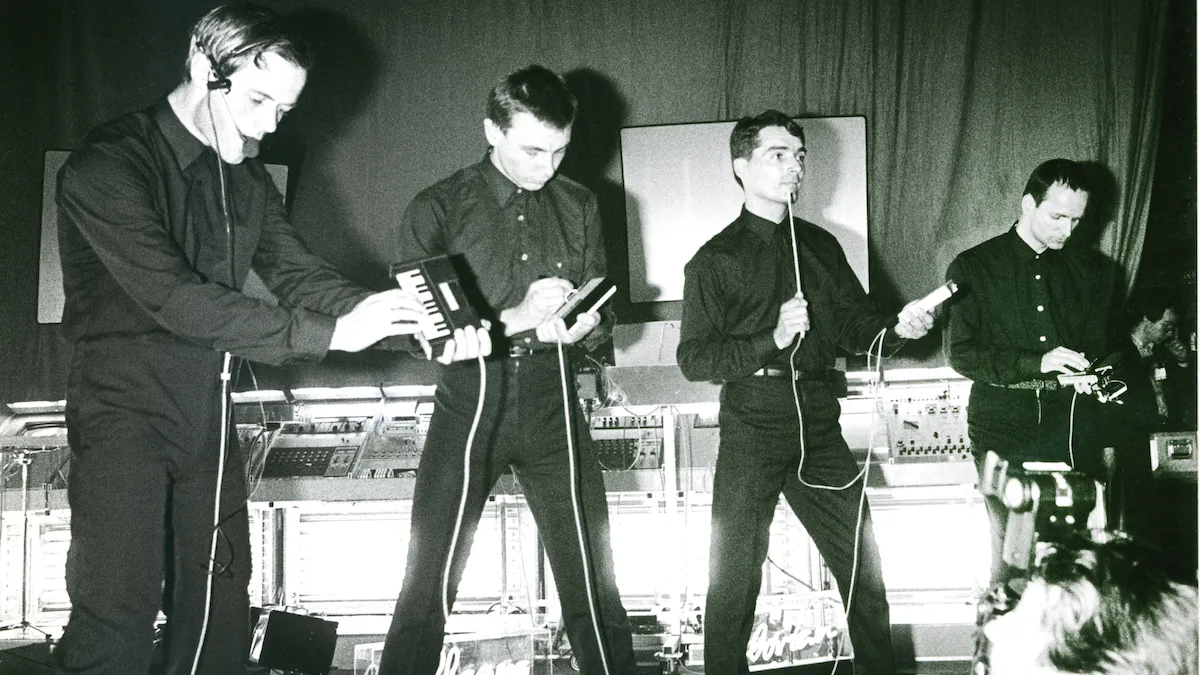
King Crimson in 1974 (left to
right)—David Cross, John Wetton,
Robert Fripp, and Bill Bruford.
eq0310_punchin.dsg 1/11/10 2:42 PM Page 8
Much like the recent Beatles catalog
reissues, the task of properly presenting
the original sound was a key
issue, ensuring that picky old fans
wouldn’t be disappointed by the
modern representation of 40-oddyears’-
old recordings.
A longtime Crimson fan and a frequent
collaborator with the band’s
founder, Robert Fripp, Porcupine
Tree’s Steven Wilson was called upon
to dig into the old King Crimson tapes
and help give them lush new life,
which he did using his pre-Intel Mac
G5 running Logic 7 and an Apogee
Trak2 A/D converter.
Beyond touching up stereo mixes,
Wilson saw Crimson as the perfect
band for the surround-sound treatment.
“Whatever kind of music you
classify Crimson as—art rock, progressive
rock—this is a genre that lends
itself perfectly well to surround sound
in a way that, say, AC/DC wouldn’t
lend itself to,” he says. “King Crimson
is very impressionistic music; it’s not
trying to sound like it was made in a
basement, it’s trying to reach for
something higher, something more
epic, something more experimental.”
Wilson experimented with alternative
positions for instruments and
voices in surround sound, but he was
careful not to eclipse the visceral slam
of the original stereo mixes: “I was
throwing out the stereo mixes and
going back to square one and asking,
‘Where should things go, where would
they go, where could they go?’ There
was no reference from the stereo
there. I tended to have the bass centered
in the front middle, but everything
else was up for grabs.”
But he was aware that with surround,
there’s a risk of creating a
hollow center in a previously hardhitting
mix. “There’s a case to be
made for things having more impact
when they are more congested,”
Wilson says. “Some people prefer
the Beatles’ mono mixes over the
stereo, for example. With surround,
there is a danger of creating more
space but somehow pulling apart
the glue that holds the music
together and gives it its power.
Crimson’s music, however, is layered
enough that it can withstand this
more spacious approach, in a sense
pulling the stereo apart wider and
creating more of a spectrum.”
For both the stereo and surround
mixes, having access to original studio
reels helped. “There was no need to
use the bounce-down slavery of the
original mixes,” Wilson says. “We could
go back and use the original session
tracks. So we had first-generation
drums and bass on In the Court of, for
example, because the tapes you heard
on the original albums were actually
third-generation by the time the master
reel was compiled in 1969.”
But there were other issues.
“Some of the tapes were in such terrible
condition that the engineer had
to hand-wind them onto another reel
and fix all the edits and get all the
glue and crap off the tape,” Wilson
says. “Some of the tapes came back
with dropouts, where literally the tape had shredded away. We had to
lift, occasionally, a moment or two
from somewhere else off the track
to repair a piece of music.”
Otherwise resisting the urge to do
anything radical in his treatments,
Wilson contented himself with minor
adjustments to stereo placement, EQ
(with Focusrite d2 and Pultec EQP-
1A plug-ins), and reverb (Logic
Space Designer and Digidesign DVerb
“in mono mode and very often
with a hi-pass/low-pass filter to
emulate those vintage reverb
effects,” he says). He points out that
if there are noticeable differences in
any of the mixes, it’s because Fripp
himself insisted on them.
“I was trying to be religiously faithful,”
he says with a laugh, “and occasionally
Robert would
come in and say, ‘You
know what, I never
liked that anyway’ or
‘Now we have a
chance to fix this,’ so
he was making
changes to some of
the stereo mixes that
I wouldn’t personally
have made.”
But Wilson
believes the
surround-sound
treatment—done with
monitoring help from six self-powered
Genelec speakers—was the ultimate
tribute to a legendary band. “In my
experience, anyone who hears their
catalog in surround sound loves it,” he
says. “And if they say they don’t like it,
it’s typically because they haven’t
heard it properly. To be able to hear
your music in surround sound is really
the ultimate.”
Print Page