Print Page
Nothing Is Sacred: N.E.R.D Rewrites Rules To Keep Their Cool
10/1/2010
by Tony Ware
Not everything comes easy, not even for seasoned
veterans of the production world. Sometimes you
must experience an inspirational reboot, which is
just what was initiated during the creative process
of Nothing, the fourth full-length release by
N.E.R.D—the trio consisting of Pharrell Williams,
Chad Hugo, and Shae Haley.
Williams and Hugo—childhood friends and no
strangers to the pop charts when collaborating as
the Neptunes—began N.E.R.D with fellow native Virginian
Haley around the turn of the millennium.
N.E.R.D (which stands for No One Ever Really Dies)
acted as a live funk-rock counterpart to the stripped
down, tightly compressed synth creep they’d commercialized
since the mid-1990s. Some of the Neptunes
classics include the Clipse’s “When the Last
Time,” Ludacris’s “Southern Hospitality,” Mystikal’s
“Shake Ya Ass,” Snoop Dogg’s “Drop It Like It’s
Hot,” and Gwen Stefani’s “Hollaback Girl,” while
N.E.R.D tracks include “Lapdance,” “She Wants to
Move,” “Everyone Nose (All the Girls Standing in the
Line for the Bathroom),” and May 2010’s “Hot-n-
Fun.” Now, after a period of touring and trial
sessions, comes Nothing, the follow-up to 2008’s
Seeing Sounds.
Of course, Nothing came out of something. “We
had been working for awhile, had amassed 27
songs . . . and at that point we determined the
music was good, but good was not good enough,”
reflects Williams. “We’d also experimented with a
girl named Rhea who’s in a band called Jealous
Lover and is super cool, but at the end of the day,
for what we were doing for N.E.R.D, everything just
wasn’t good enough; so we scraped it all and
started with nothing.”
This isn’t the first time N.E.R.D has
commenced a complete reworking on the
group’s material. The band’s first album, In
Search of…, began as a digitally sequenced LP
that debuted in Europe in September 2001. By
the time it bowed in North America, though, it
had instrumentation re-recorded during tracking
sessions with the four-man band Spymob (this
remains the version in print). For Nothing, however,
the inverse is in effect. After collecting
material fed from vibing off the crowds, Nothing
finds itself affected in equal parts by working inthe-
box while thinking outside of it.
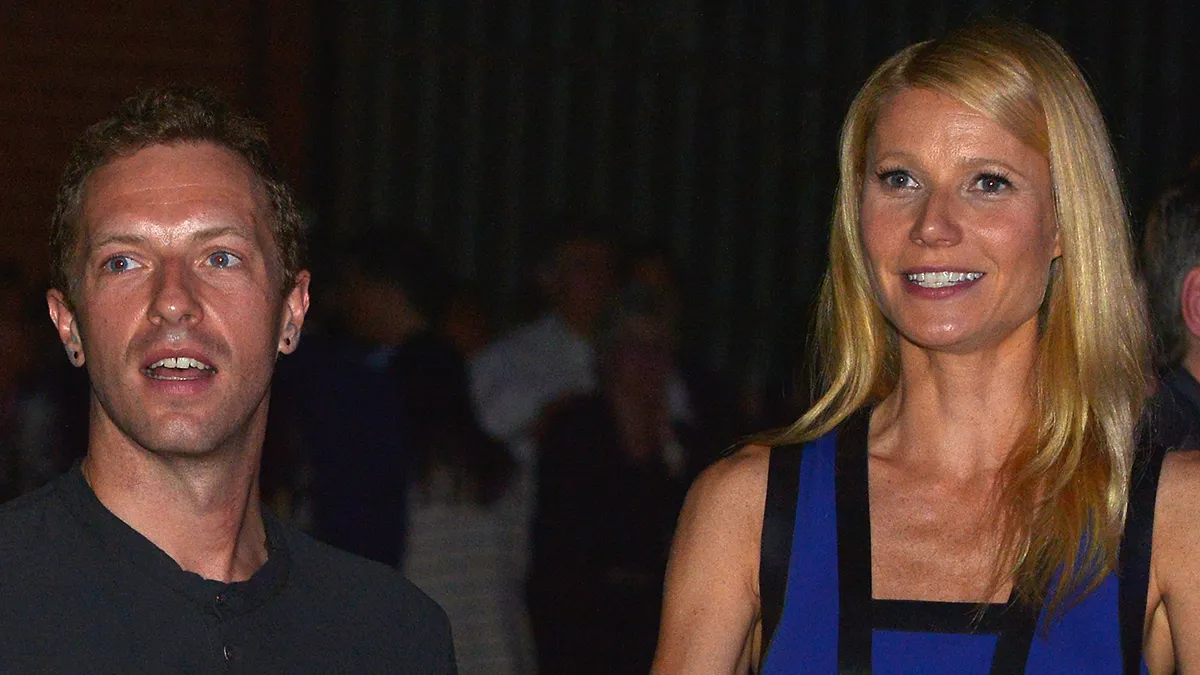
N.E.R.D (left to right)—Chad Hugo, Pharrell Williams, and Shae Haley at the 2010 BET Awards.
In the past, much of the compositional phase of N.E.R.D involved sketching sessions with a Korg
01/W sequencer acting to trigger Korg Triton
Extreme and Triton Pro synths. An Access Virus TI
synth, Ensoniq ASR-10 for chopping drum samples,
various Roland synths, bassline generations, and
beat machines were some means to further the
framing, which would be augmented by live guitar,
bass, and drums used to replay keyboard-drafted
guidelines. Where the shift took place in the
approach to Nothing, however, was in the means of
establishing song templates. The impetus was partially
based on more wholeheartedly embracing digital
audio workstation programs such as Logic
Studio Pro, while using new tools to invoke a spirit
of emotionally responsive late-’60s/early-’70s psychedelic
pop with the final product.
“The world is changing; so much is going on,”
says Williams. “You’ve got technological advancements
like the iPad . . . Mr. Jobs is telling you where
everything is going in the future because it makes
people feel at ease as it still involves the most
important thing to a human being, which is touch.
But there are technological failures, like the [Gulf of
Mexico] oil spill. It just seems like the early ’70s all
over again. The Doors were a huge influence. America,
Neil Young . . . a lot of stuff. It just feels right.
“Nothing is an entry way into the world we created,
which is an interesting biosphere of sounds
that take you into the future of the ‘baba cool’ movement,
which is part hippie, parts fashion and art,
posh and bohemian mixed. We wanted to make
music that sounds how that must look,” continues
Williams. “Usually when you make something deep
it’s so heavy, and I think we wanted to make some
2012 stimuli . . . that would take you to great places
but that was light on the ears and the brain. It’s not
as much to think about as something to feel.”
Williams describes the artistically engaged era
of the historical French flower children, as well as
sessions with Hans Zimmer (while scoring the film
Despicable Me) as introducing influences such as
the Spaghetti Western scores of legendary Italian
film composer Ennio Morricone into the creative
mix. These retro-modern intentions, however, were
being filtered into the N.E.R.D camp through a
decidedly contemporary work-flow adaptation.
“We had all the tracks done that we had worked
on for over a year, and then we came back from
Christmas [2009] to a session in Miami,” recalls
Andrew Coleman, the Neptunes and thus N.E.R.D’s
chief engineer for over 15 years. “We had this extensive
list of gear that people had spent days collecting,
and Pharrell walked in with his backpack and a
USB keyboard and said we could get rid of it—he
was working on the laptop now. I kind of felt bad for
all the guys who stayed up at night searching for all the gear, but now all the songs and
sounds are from 2010.
“It still sounds like them, but it also
offers a different palette,” continues Coleman.
“It’s like an artist who used to do
amazing watercolors, but now also works
with oil paints. And you can take the keyboard
and laptop anywhere.”
Hugo had previously adopted many inthe-
box techniques, and Williams always
had a backpack to tote around various
fashionable gadgetry, so adding in a Mac-
Book Pro and portable MIDI controllers
was no stretch. Certainly, not having a
dozen pieces of outboard gear to have to
relocate or rent (not to mention rewire) was
a relief to Coleman and second engineer
Mike Larson, who split N.E.R.D sessions
between such facilities as South Beach
Studios, Midnight Blue Studios in Miami,
and the Neptunes’ own Hovercraft Studios
in Virginia Beach (Hugo’s home base for
mixing elements in to the base).
With ideas no longer waiting to be
actualized with bodies sitting in front of
the Korgs and beats synced to the Pro
Tools clock, the composing of Nothing
involved entire rhythm and chord progressions
plus sequenced instrumentation
ideas (courtesy of ESX24 virtual sampler
libraries) being brought to Coleman’s Pro
Tools|HD rig to form the bed of tracks.
Monitoring with the Apogee Ensemble,
the team would bounce the tracks down
and import them, at which time Coleman would begin to apply signature tweaks to
get a characteristic snap and thump.
“I use a lot of sub-mixes, and normally I’ll
have some multiband compression, like the
C4 [parametric compressor] from Waves
going on those,” reveals Coleman. “[Metric
Halo’s] Channel Strip is another one on a
lot of stuff . . . maybe some Waves L2
[Ultramaximizer] across something. We’ll
adjust the threshold and the ratios until it’s
where it needs to be; there’s no preset.”
At this point, additions can come from
several directions. The Access Virus TI
still has a noticeable presence on Nothing,
and live overdubs are blended into
the programmed environment to
reinforce it. Most often these guitar and
bass licks come from Hugo, and sometimes
Coleman, run into the Pro Tools DI,
and then are processed through Line 6
Amp Farm and Tech21 SansAmp. In
short, Williams often lays down the initial
patterns he has been playing out in his
head (including everything from clavinet
to handclaps), Hugo replays keys and
adds tones such as “angry saxophone
noise” (his description), and then
Williams and Haley track lead vocals,
harmonies, beatbox, and other percussive
sounds. When needed, different
drums are auditioned and triggered from
disk, but there was no recording of additional
live kits during the 2010 sessions.
Finally, tone sculpting commences.
“It’s a different process [to be more virtual], and it does make some things easier,” says
Hugo. “There are also songs on the album that are
more straightforward in rhythm, more four-on-the-floor,
so there wasn’t as much time in drum editing. But this
let us work with the vast selection of sounds we could
put together. We’d track guitars with a Gretsch, and
Drew could go in there and work with the overtones.”
For example, Coleman illustrates, “We spent a lot
of time on the bass and guitar lines in [first album
single] ‘Hot-n-Fun.’ The guitar reverb is a nice short
haul, but it helps it stand out. We screwed around
with decay times, playing with the presets in the
Waves Renaissance plug-ins.” Occasionally, re-amping
is used in place of processing.
As for the vocal recording chains, little changed
according to Coleman. The Sony C800G, Neumann
U 67 and AKG C 12 VR mics, paired up with an
Avalon Vt-737sp, Neve 1081, or Tube Tech CL 1B
preamp/compressor did the lion’s share of the sessions.
“The clarity of the C800G always works well
for me getting what Pharrell’s voice should sound
like,” says Coleman. “Pharrell always says to take
the lows out of his voice [rolled off around 140Hz].
He prefers the upper-mid to high range—it cuts
through the music a little better.” A minimal compression
setting of 2 to 3dB is reported to be used, and
a highpass filter of 60 to 80Hz is set with preamp
high gain on zero and a varying attack.
When recording Williams’ voice, perhaps a dab of
hall reverb would be applied, but for the most part,
neutrality in a streamlined signal path is the goal. In a
song such as “Help Me”—with its aqueous guitar
arpeggio and horn stabs (courtesy of trumpeter
Jason Carder) reminiscent of the Animals “House of
the Rising Sun”—the vintage inspiration matched the
technique in that the echo on the vocals comes from
the pure analog tradition of standing five to 10 feet
off the mic, not from applying convolution reverb, etc.
And on “Victory,” where vocals cascade with a
Queen-meets-doo-wop chorale, the team established
a root note, recorded each harmony, and stacked
them, rather than creating parts virtually. Small increments
of complementary coloration were provided by
the combination of an all-tube Manley VOXBOX and
the Neumann U 67.
Ultimately, when asked for specifics as to the
production applied to the latest N.E.R.D album, Williams and Hugo want to say, well,
nothing. The duo believe this latest
release has a more important agenda to
push than a hard vs. soft knee loudness
war debate or to come across as the
endorsement of a specific
program/technique.
“I think the most effective interview we
could offer is to inspire kids to come closer
to your craft, find technology that you like
that really allows you to not have to think so
much, but at the same time enables you to
stay focused on your idea and chisel away
note-by-note, chord-by-chord, bassline-bybassline,”
says Williams. “You can have all
the machines in the world, but if you’re not
comfortable with something, you won’t
make anything. Try different programs and
get comfortable with yourself, with your
respective instrument, so that you can
make music that affects people in a positive
way, takes them on a roller coaster and
offers them escapism.
“If we’re about to inspire anyone, I
want it to be beyond trying out specific
technology,” continues Williams. He
wants people to know they are “capable
of doing anything.We even have a website
meant for new artists: ARTST.com—it’s
‘artist’ without an ‘i’ because it’s not
about me, it’s about you.”
While he wouldn’t go into any specific
thickening agents or equalizing
challenges on Nothing, Coleman did
celebrate the experience. “A lot of this
album has been about experimentation,
so that’s exciting for me to hear all those
different layers of sound, different drum
sounds we didn’t have access to
before, and to see how we incorporated
the guys’ production style into a new
medium,” says Coleman.
At press time, 15 tracks were planned
for inclusion on Nothing, with mixing
duties going to Mark “Spike” Stent. In the
end, Williams indicates the album exhibits
an appreciation of simplification, a
response to the frustrations of the modern
technological world, a celebration of
(sexy) release, and, as a line in “Hot-n-
Fun” goes, “People don’t wanna think no
more—they just wanna feel . . . they
wanna let go.” If they can provide stimulus
for people to have a good time and
explore their own means of expression,
N.E.R.D would love Nothing better.
Print Page