Print Page
Robert Glasper Experiment
3/14/2012
ASK ANY young student of jazz for his or her current influences and the answer
will be short and sweet: Robert Glasper. The 33-year-old pianist has
consistently and often brazenly mixed jazz and hip-hop, thrilling fans with
his new conceptions. Black Radio, Glasper’s fifth release, sets the pianist
even further apart from his contemporaries, his brilliant band (The Experiment)
supporting Erykah Badu, Ledesi, Lalah Hathway, and Bilal, as well
as rappers Mos Def, Lupe Fiasco, and Shafiq Husayn.
“Mos Def and I wrote a song for the album titled ‘Black Radio,’” Glasper
explains. “We talked about how when an airplane crashes, the only thing that
survives is the black box, or the black radio. It holds the truth. I felt that was a
good title for the album; when everything around us is crashing and burning
musically, the true music will prevail. And the record is all African-American
urban artists who all get played on the radio. It has a double meaning.”
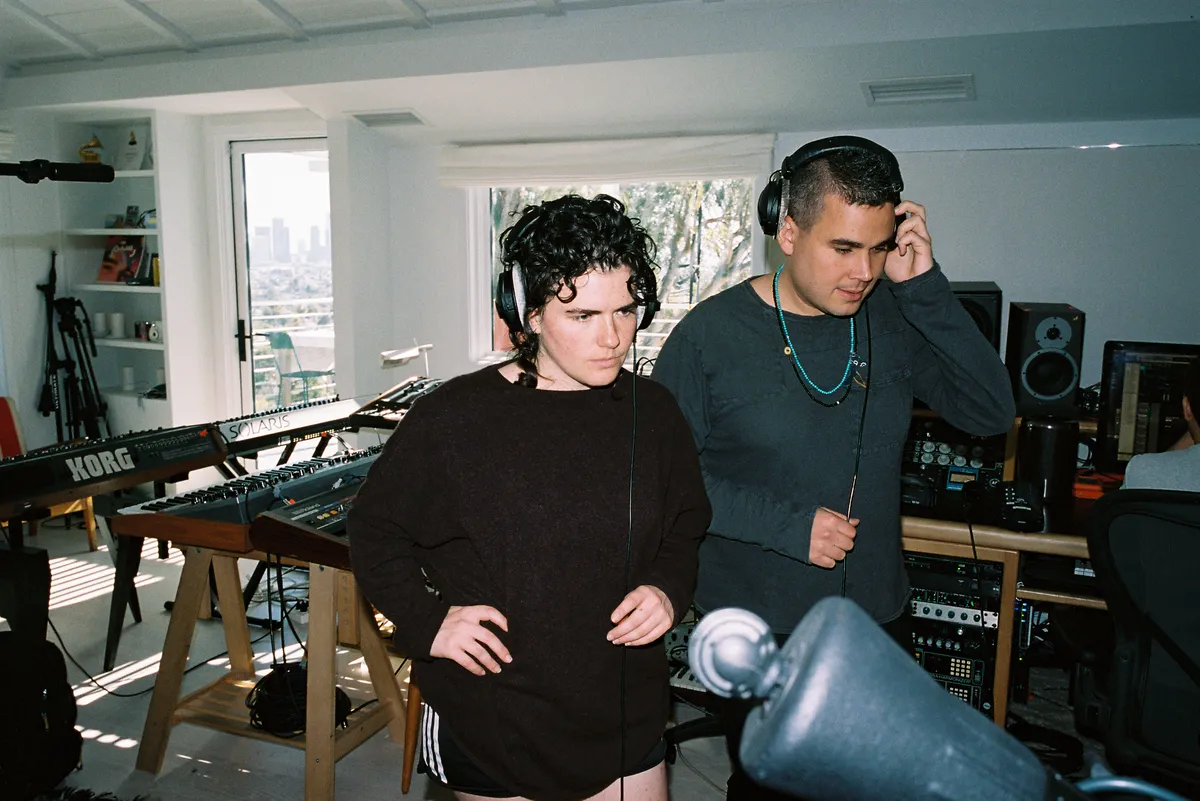
The vocalists recorded live with the Robert Glasper Experiment as they
tracked at LA’s Threshold Sound, keeping studio trickery to a minimum. Though
funky and mellow, Black Radio remains true to jazz’s improvisational roots.
“I always record live,” Glasper says. “I hate overdubbing. This record
evolved more through production, but for the most part it’s still the same. I
am a jazz musician at heart. So I love in-the-moment playing, even if there’s
mistakes. You can break the spirit if you overdo it and try to be perfect.”
Glasper wrote with and for the vocalists and also chose cover songs,
resulting in Lalah Hathaway singing Nirvana’s “Smells Like Teen Spirit,”
and Erykah Badu channeling Billie Holiday on John Coltrane’s “Afro Blue.”
Also standard for Glasper, the songs of Black Radio are all first takes.
“My last three albums were 95 percent first takes. I’m not into doing
a second take for the sake of it. If I love it, I am keeping it, ’cause that’s
where the magic is. When you do another take, most of the time you are
not going to like it. When you play jazz, you’re soloing and improvising.
When you do that 12 times, you’ve overplayed yourself. You have to save
energy to play jazz or you’ll get burned out.”
Recording multiple vocalists live with Glasper’s band, engineer
Keith Lewis (Mint Condition, Billy Preston, After 7) used the same mic
throughout and added effects in the mixdown.
“Erykah used her own mic at a different session,”
Lewis says. “Mos Def brought his Shure Super
55. Everybody else sang through a Neumann
U 67, which is pretty sensitive. I EQed vocals
during mixdown [at his Flyin’ Dread Studios in
Venice, under the alias Qmillion]. We recorded to
192[kHz]. People say you can’t hear the difference,
but if there was ever a project to do it on, this was
it. It’s real music, where you hear the dynamics
of the vocal going up and down. 192 gets all the
nuances of the performance; just that much more
information to the box than 96 or 48.
“My vocal chain is the Teletronix LA2A
through a Pultec,” Lewis adds. “The LA2A is the
first one I hit; you have to make sure you are not
hitting it too hard. Everything else we recorded
with mad outboard gear, Urei 1176s, Tube-
Techs; and it was cut on a vintage Neve board.
That all adds to that warmth and cleanness.”
After vocals, perhaps the most important
element on Black Radio was Glasper’s piano.
“I like the piano to sound dark and moody and
warm like a big couch,” Glasper says. “I ask
the engineer to make it sound a particular way,
but often its sound comes from my touch. And
I use a damper pedal, which a lot of pianists
don’t use. It muffles the strings and makes the
piano sound warmer and darker.”
“We used AKG 414s for piano, ’cause they
pick up the body of the sound,” Lewis explains.
“I put one pointing to the right side of the
keyboard about a foot and a half off the strings,
that’s the high notes. Then one in the middle
for the mids, then the third mic at the bass end
of the strings. I also use a room mic just to pick
up some of the ambience.”
The final element in the Black Radio chain,
after recording bassist Derrick Hodge, vocoder
manipulator Casey Benjamin, and DJ Jahi Sundance,
was drummer Chris Dave, who uses three
snare drums, peculiar cymbals, and a 28-inch
bass drum. Dave is renowned for incorporating
the feel of the late hip-hop producer J. Dilla.
“That big bass drum doesn’t give you a tight
sound,” Lewis says. “I used a Neumann U87
placed about five feet behind Chris on the floor,
aimed at the kick drum to pick up the attack
and grab a little more of the snare. I had one mic
[vintage AKG D120] inside the bass drum, pretty
close to the head. Then for my outside mic, a 414
two feet back from the head. Then I used a reversed
Yamaha NS10 to get that subby tone.”
A pair of SM57s top and bottom covered the
snare drums, the third snare drum alternately triggering
a dub delay. A stereo pair of Royers acted as
room mics “as far away from the drums as I could
get them and a couple feet from the back wall.”
Sennheiser 421s picked up Chris Dave’s toms; a
Neumann KM 84 captured the hi-hat.
“Chris uses some crazy cymbals, so I used
Sony C-48s as overheads left and right to catch
a wash,” Lewis continues. “I catch the cymbals
individually as well. Sometimes you want to
have more control without turning up everything
or rolling stuff off. Chris uses broken
cymbals, cymbals that are mashed together,
cymbals with chains on them. It’s easier if I
mic each cymbal. I use KM 84s again; I aim
one at the bell for the ride cymbal, about a
foot-and-a-half off. He has a spiral cymbal
that hangs down three feet. I put the mic
somewhere in the middle so it will pick up the
vibration of the whole thing. Then on the other
cymbals, I go a couple feet away.”
Black Radio is the sound of modern R&B,
subtle electronica, and the harmonics of jazz as
filtered through Glasper’s unique worldview.
Old-school meets new-school with a righteous
bump in-between.
“Robert and I didn’t have to over-discuss the
sound of the album, because we both love jazz
and we both grew up in the hip-hop era, so our
sonic sensibilities are in sync,” Lewis confirms.
“The mood and attitude of the piano sets the
overall tone: dark and brooding at times and
forceful at others. The goal was to create the
warmth of the records from the ’70s combined
with the hard-hitting presence of hip-hop drums.
We wanted a very musical record that could still
be played next to machine-driven hits.”
Ken Micallef covers multiple genres of music
for various domestic and global publications.
He lives in Greenwich Village with his cat Monty
and his Shindo hi-fi.
More Online
Read
interview extras and outtakes.
Print Page