Print Page
Make or Break
1/10/2013
Want to turn your home-studio hobby into a successful producing career? Several pros reveal how to turn your dream into reality
Its a fantacy job. May be some of your friends
have talked about doing it, and ten years later,
they’re still talking about it. But paying your
bills as a professional music producer is an
actual, attainable goal. Electronic Musician
knows that because we feature real, bona-fide
producers who live the life. Supa Dups (Bruno
Mars, Rihanna, Mary J. Blige), Damian Taylor
(Björk, The Killers, Arcade Fire), and Andrew
(Mudrock) Murdock (Godsmack, Powerman
5000, Avenged Sevenfold) know it because
they made it happen for themselves. They
weren’t born into über-rich families who
subsidized their lifestyles while they “played”
in the studio. They just worked on it, day in
and day out.
To gather some insight on how aspiring
producers can make the leap from hobbyist
to professional while steadily build up their
discography (and bank account), I picked
the brains of Supa, Taylor, and Murdock—as
well as Senior Vice President at Nettwerk
Producer Management Alia Fahlborg and
Senior Vice President of A&R at Warner
Brothers Records Jeff Sosnow—to gain insight
on how to get your business off the ground.
Gotta Start Somewhere Jamaica-born
Supa Dups (aka Dwayne Chin-Quee) started
DJing at the age of 11. Two years later, he won
a DJ competition, the reward for which was
spinning on Miami’s Power 96 radio station.
As he continued to DJ, he discovered a passion
for music production. Supa’s aunt saw his
potential and bought him an Akai MPC3000,
but he didn’t have the same immediate success
he had with DJing.
“I went to a couple of influential people
at the time, and they declined me,” Supa says
with a laugh. “They were like, ‘You need to
stick with your day job and leave music alone.’
That was a huge reality check for me. But I
had this drum machine, and I developed a
style of remixing that made me very popular
amongst the reggae community, and after that,
it exploded all over the world.”
 |
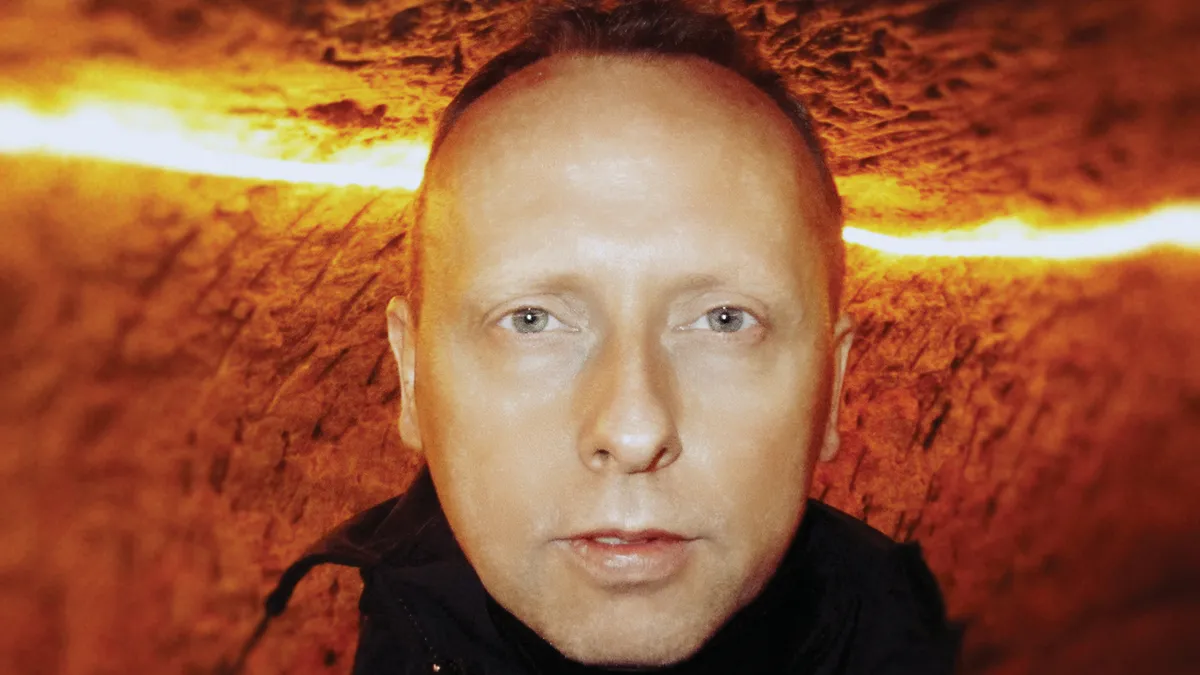
| Damian Taylor |
Along with five other friends from Jamaica
(who are also of black and Chinese descent),
Supa founded the Miami collective Black
Chiney. The group churned out dancehall/
hip-hop remixes and released mixtapes. One
of Supa’s beats from Black Chiney’s Volume
7 caught the ear of his future manager, Mr.
Morgan, and led Supa to his first big break,
Nina Sky’s “Turnin’ Me On.”
“I met him in Jamaica when I was down
there for a gig,” he says. “I gave him a CD, and
he was working on the Nina Sky project at the
time with Cipha Sounds. They heard the track
and were like, ‘Yo, this track is crazy.’ So that was my
first paying production gig. It’s not like I even went
out and was seeking work from it. I was just making
this beat to put on the CD because I could.”
Meanwhile, as a teenager, Taylor got his
foot in the studio door by doing odd jobs and
janitorial work. “I was really lucky that there
was an engineer who would let me sit in a
corner on his sessions as long as I didn’t touch
anything,” he says. “Even if you’ve got all these
talents, people aren’t going to know it until you
have the opportunity to show it. The downside
of working in a major studio is that you’ll
basically have to sit in the corner and shut up
for quite a long time, but it’s a great way to
learn things.”
While doing Pro Tools editing at a small
studio in London—“a kind of advertisingin-
the-back-of-a-magazine place where
local bands would pay 25 pounds an hour,”
Taylor says—was introduced to producer Guy
Sigsworth. They hit it off, and for the next
couple of years, Taylor assisted Sigsworth
and worked on Björk’s amazing fourth album,
Vespertine.
In between engineering jobs, he produced
smaller bands. But it wasn’t his studio work
with Björk that got his phone ringing. “It’s
funny because more people have asked me to
produce their records off the back of me playing
with Björk live than from my time in the studio
before,” Taylor says. “It was about me being
at festivals and meeting lots of bands, because
if you’re stuck in a studio slaving away all the
time, you don’t meet many other artists.”
Murdock also ignited his production career
was by meeting bands at shows, where he was
working as a live sound engineer in Boston.
Bands loved how he made them sound live and
asked him to produce. One band he recorded
was signed to Warner/Chappell Music (now
Warner/Chappell) and acquired $10,000
from the publishing company to build a demo
studio. When the band broke up, Murdock and
the rhythm section kept the equipment and
turned the rehearsal space into a studio.
In the beginning, he charged “broke bands
with day jobs” $15 an hour. “They’d scrape
together $400 and would want to record all
17 songs that they knew,” Murdock says. “As it
went along, I started inviting in bands that I
liked to record and told them, ‘Look, I’ll do two
songs with you. It’s free, you own the songs
when I’m done, but I’m driving.’ So I was able
to barter with them the recording time for the
ability for me to use them as a guinea pig.”
Murdock’s first big paycheck was Godsmack.
Singer Sully Erna was the drummer in a metal
band Murdock had recorded. When Erna started
Godsmack, he came to Murdock with $3,000
to make a record. “I was planning on recording
and mixing that record in a week, and it became
obvious that we weren’t going to finish it in a
week,” Murdock says. “I gave him the mixing
for free because it was sounding good, it was
something I thought I could play other metal
bands that wanted to record at my studio, and
that’s as far as I thought about it. A year later, he
sold it to Universal, put a contract in place for
me, and that contract bought me a house.”
Getting the Gigs “I read something that said,
‘Some people are lucky, but the harder you work,
the more you’ll get lucky,’” Supa says. Rather than
hustling and pounding down the doors of musicindustry
execs, Supa spent extra time working.
“I’m never up in their butt saying, ‘Please work
with me!’ I just make my talent speak for itself.”
Part of that talent involves a lot of
multitasking. “The landscape is such that
people can’t afford to hire a producer and an
engineer often, so you need to be able to wear
a lot of hats,” Murdock says. “Ninety percent
of the producers out there are wearing at least
two hats.”
Years ago, Timbaland’s engineer Jimmy
Douglass offered some advice to Supa: “Do you
want to be a better producer? Learn how to
engineer,” he said. So Supa learned how to mix
his tracks and avoid things like phase cancelation
and ensure that his beats sounded good on
speakers. “When you learn how to structure
beats so nothing is clashing, it makes you a better
producer because when you play it for people,
it sounds better, and they get the point more
quickly,” he says. “Plus, when you give it to the
mix engineer, you give them a good point of
reference to work with.”
As for Taylor, he calls himself a producer,
engineer, mixer, programmer, composer, performer, editor, remixer, and software
designer. Lots of hats. “I was asked to work with
a lot of different people because I was quite
versatile,” he says. The more he put himself into
different situations, the more he learned from
the likes of Sigsworth, Spike Stent, and dozens of
others in the studio.
But wearing multiple hats comes with a
caveat. “You need to be aware of which hat is
on your head at any given moment,” Murdock
says. “The engineer hat and the producer hat
will knock heads with each other because the
engineer is like, ‘We’re done! It sounds good.’
The producer hat is telling you, ‘Yeah, the song
sounds fine, but they’re not the right drum parts.’
And the producer hat should definitely win. Don’t
consider it a waste of time if you’re throwing an
entire recording away and starting a song over.
Consider it the road to something better because
if your gut is telling you that it’s not right, it’s
not right. The producer in you will know that
immediately, but the engineer in you will fight it
and want to keep it because you don’t want to do
it all over again.
Another potential pitfall about producing is
the importance of protecting your brand name.
“Know what you want to do, what you want your
public perception to be, and accept projects that
lend themselves to that because as a producer,
your name is your brand, and you’re pigeonholed
really fast,” Murdock says. “If you’re somebody
like Colin Richardson, who is an amazingly
talented rock/metal producer, and you just want
to be in that genre, then go for it. Be it and own it.
But if you want to be somebody like a Rick Rubin,
who has produced a huge variety of people,
be aware of that. The parallel I like to make is
Leonard Nimoy can only play Spock. As a young
actor, he took that role, and it’s become so iconic
that he was stuck with that for his whole career.
So it’s a dance that actors play as they establish a
name on the acting landscape. It’s like, don’t do
two horror movies in a row, or you’ll become the
horror-movie actor.”
Hiring A Manager? Murdock, Supa
Dups, and Taylor all have managers, but they
didn’t start working with them until there
was something to manage. “It is important
as a producer manager that the client has
something to run with,” says Fahlborg,
whose roster includes Bob Clearmountain,
Jim Abbiss, and Tom Lord-Alge. “It doesn’t
always have to be a big hit, but there has to be something bubbling under to enable the
manager to catch the interest of A&R people,
artists, and artist managers—something to set
the client apart from the many other producers
and mixers out there.”
For Murdock, that time came “when the
business side got so complicated that it started
interrupting the art,” he says. “I found my first
manager by cold-calling management companies
and saying, ‘I’m the guy who did Godsmack. I’m looking for a manager.’ It was the week when
Godsmack went Gold. That’s when you should
look for a manager, not before then. If you get
some douchebag local person who just wants to
play manager, that’s a huge mistake.”
But trying to get in with a big firm can be a
problem, too. “What can happen is people look
at these huge producer-manager companies
that have six million people on their roster and
go, ‘Oh, my favorite producer is on that one. I
want to try to be on that roster,’” Taylor says.
“If you’re looking after a ton of established
producers and engineers, there’s not much
motivation to build a career for someone who
doesn’t have one.”
Taylor’s working relationship with his
current manager, Liz Hart, is symbiotic. She
finds creative ways to help him with his career
and negotiates great deals for him, and he
fosters relationships to makes her job easier.
For example, he once gave The Killers an open
invitation to work with him, and four years later,
they called upon him to help produce their latest
album, Battle Born.
“Liz and I have a very collaborative
relationship,” Taylor says. “We do a lot of
brainstorming together, and the last year has
been super busy, so it’s been more a case of trying
to keep me afloat,” Taylor says. “With a good
manager, it can be a very creative relationship
even though it’s specifically about the business
side of what you do. You’re discussing strategy,
the right people you want to be talking to, which
projects you’re interested in, and how one step
can affect the next step.”
Fahlborg has a similar relationship with
her clients. “My most successful clients
realize that the keys to the kingdom are in
an active partnership where both the client
and manager are working together to achieve
their goals,” she says. “Every client has a
different comfort level in dealing with industry
people, and it’s important to work with those
individual preferences but to always realize
that relationships are extremely valuable in
our business. I’ve seen clients put themselves
out of business ignoring that reality, and I’ve
seen others experience immense success by
making it Rule No. 1—after making great music,
that is.”
Although Supa gets along with many people
in the industry, he knows when to step aside and
let his manager, Mr. Morgan, handle the dirty
business. “If I don’t want to do something,” he
says, “when I’m not telling people no directly but
my manager is telling them no, they’re not really
mad at me. They’re mad with manager even
though I’m the one who’s saying no. So it’s a kind
of good cop/bad cop situation.”
Getting Along With A&R As part of her
job, Fahlborg oversees her roster, negotiates
producers’ deals, and builds relationships
with A&R and artist managers, attorneys,
and publishers. Her team also tracks budgets,
books musicians and studio time, arranges
travel, takes care of invoicing, and tracks
royalties. “A great deal of time is spent chasing,
tracking and analyzing royalty statements and
Sound Exchange payments,” she says. “That
is an extremely tedious process but does yield
tens of thousands of dollars of otherwise lost
income for some clients.”
But while producer managers take on a lot
to serve their clients, producers still need to interface directly with A&R managers, which
isn’t always easy. “They’re the people who hold
the purse strings, and they’re important to the
project,” Murdock says. “But frankly, they often
have ideas that are counterproductive. They have
good ideas, too, but it’s another relationship that
needs to be massaged. And that’s the huge part of
being a producer: massaging relationships with
singers, the rest of the band, the manager, and the
A&R guy. There are a lot of political waters to be
tread, and I’m not a very political person.”
Supa plays the game diplomatically. “Not
everybody is going to like you, and you’re not
going to like everybody because at the end of
the day, some people really aren’t good in the
business,” he says. “But you have to be cool with
everybody: A&Rs, studio owners, interns…. Most
importantly, you have to just remain humble, not
hard-headed.”
Taylor is glad to have the outside
perspective of A&R managers in a project. “I
really appreciate their fresh ears,” he says.
“They don’t have to sit there telling you what
kind of hi-hat sound to use, but they can give
you a reaction outside of the people in the
band, which can be really useful.”
Sometimes, an A&R manager can pinpoint
something that a producer or mixing engineer
misses. “I remember one time when I was
working with Eric Valentine on the All-American
Rejects’ third album, we had delivered a rough
that Jimmy Iovine loved,” Sosnow says. “But
when we played the mix, there was a sort of
molasses-like feel that slowed down the song
“Gives You Hell” a hair. The groove wasn’t the
same. After a thorough process of elimination,
Eric deduced it was a gear issue—turns out the
tape machine wasn’t working properly. It kept
getting gummed up, and we had to pull up stakes
and just mix in the box.”
The Changing Landscape Just like
producers’ ideas need to be fresh to stay relevant,
producers need to keep up with the evolving
music business to survive. “With the changes in
consumption of music and other factors forcing
the consolidation of our business, there are fewer
projects for everyone and there’s less money with
which to do them,” Fahlborg says. “That creates
stress, especially for veteran clients, and can
easily make day-to-day life in the music business
difficult. My outlook and advice are summed up
in one word: adapt. We encourage our clients to
stay positive and focused on the great music out
there, while finding ways to be more efficient in
record making.”
Taylor created that efficiency—and avoids
a ticking clock—by opening his own studio in
Montreal called Golden Ratio. He found a goodsized
place in a great part of town, which would
have been difficult to achieve in London, where
he worked for years. “It was very important to
go to a big country to make the connections,”
Taylor says. “But where I am now, I can send
multitracks around the world for pretty much
every project. We can communicate with each
other so easily. It’s cool because it means that
your lifestyle can change.”
One way Supa has adapted to changes in
the industry is by using Soundcloud as a testing
ground for his ideas. “In one day, I can let almost
15,000 people hear something that I put online,
and then it spreads like a wild disease,” he says.
“Years ago, for a track to get any kind of play, you
had to print a million CDs, or you had to give it
out to the right A&R that believes in it and wait.
Now, there is no waitin’.”
But although producers can release music
instantly, some aren’t taking advantage of the
technology. “I strongly suggest to anybody
who’s starting out to just start doing it,”
Murdock says. “So many people talk about it
or go to school for it and don’t really do it. It
sounds like such a simple thing, but it’s a big
step to get over and just say, ‘Okay, we’re doing
this project, and I’m driving.’”
Although Murdock didn’t go to musicproduction
school, he teaches audio engineering
at the LA Music Academy and believes it’s
the right path for those who need structure to
succeed. “I feel like I’m giving the kids I teach
something really useful,” he says. “One of the
biggest skills is to learn how to say something
negative in a positive light. Learn how to criticize
without ridicule because if you’re going to
produce somebody, the first thing you’re going to
concentrate on are the things that you think need
to change. And it’s really easy—I’ve been guilty
of this myself—to pull somebody out of their
comfort zone and put them in a place where they
can’t deliver anything to you.”
Murdock believes that producers will get
better performances out of artists if they feel
comfortable and ready to take risks. “I made
an amazing record with a band called the
Riverboat Gamblers, and when they came to
me, they were sure they were a punk band,” he
says. “They wanted everything to be, ‘Punk!
Punk rock! Punk! Punk Rock!’ I just helped
them realize that what a band is in reality and
what a band thinks they are almost never agree
with each other.”
 |
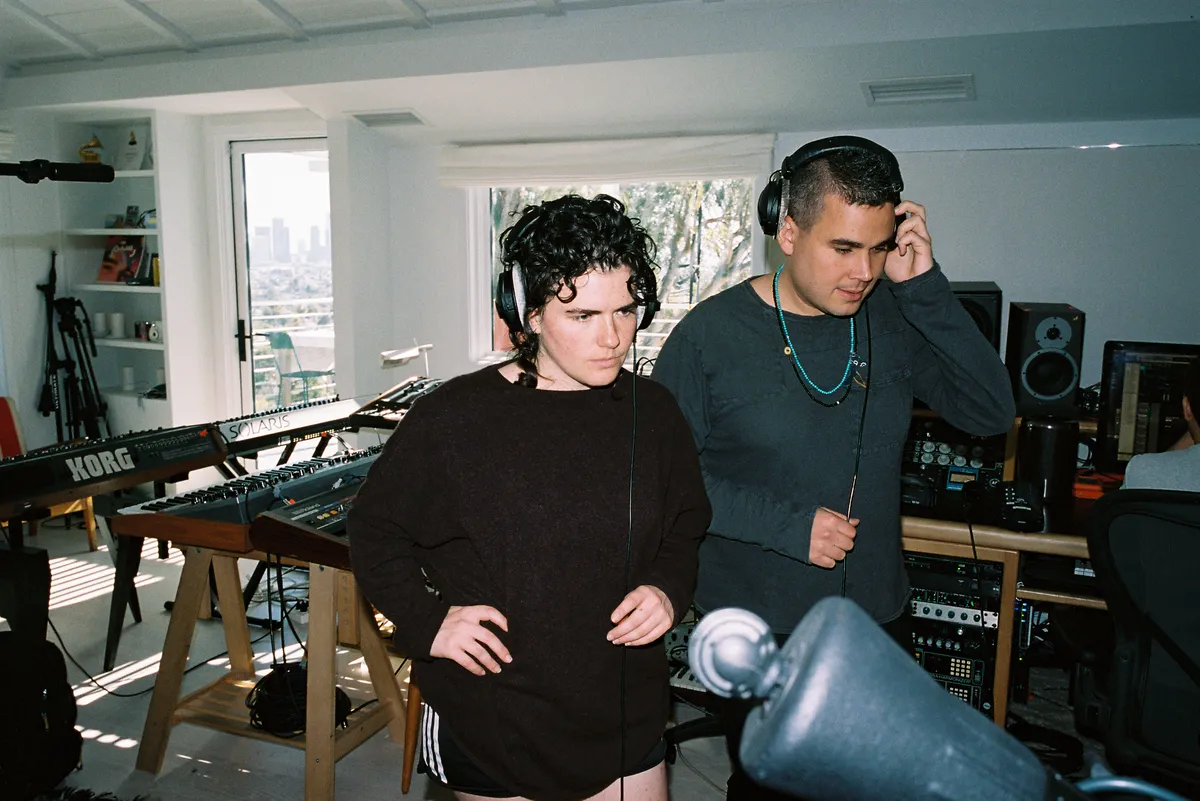
| Alia Fahlborg |
Clearing Hurdles In the ’90s, Taylor worked
with Martin Virgo from the London-based band
Mono, who offered some career advice. “He said
to me, ‘The first stage [of your career] is that
no one gives a sh*t who you are or what you’re
doing,” Taylor says. “The next stage is when
people notice, but that basically means you have
to be taken advantage of for a few years until
you’re at the point when you can start to put your
foot down.’”
Now that Taylor is calling more shots,
the challenge is balancing work with his
personal life. “My life is the studio, but I’ve got
a beautiful young family, and it’s a constant
struggle just to try to be a good dad and
husband and also love making records. I think
if you’re happy to lock yourself into a studio
for the rest of your life, then you’re going to
love it, and if you don’t, you’ll know pretty
soon and you should probably go do something
else.” [Laughs.]
Of all the many jobs Taylor’s done in studio—
from tuning vocals to tending to multitracks—it’s
always been labor of love. “All I can really say is
just absolutely follow your bliss and what’s most
exciting to you,” he says. “In my own case, it’s
been quite a long process to get here, but I’ve not been afraid to immerse myself in whatever the
situation was at the time. But it keeps you busy
and you meet people, and all those skills come
in handy.”
But while being busy is good, Murdock
suggests listening to your gut before agreeing to
take on a new project. “The biggest black eyes
in my career have been projects that felt wrong
from the beginning but I said yes to anyway,” he
laments. “Anybody in their early career is going to
have embarrassing projects that they did because
they needed money because everybody needs
the work. But at a certain point, it’s a delicate
dance between accepting projects for the money
and becoming Christopher Walken who appears
in bad movies but who is actually a really good
actor. My first barometer on whether I’m going
to accept a project is, number one, do I like the music? And number two is, are these people
douchebags?”
Once you move forward on a project,
Murdock insists that trust is key. “I discovered
that if the band doesn’t trust you, nothing is
going to happen,” he says. “There needs to be
some kind of give and take that establishes a
trust. Otherwise, the entire project is going to
feel like an awkward first date. Two things need
to happen at the beginning: I need to present an
idea that the band isn’t sure of at first but likes
later. And I also think I need an idea that I push
hard for and then abandon because I realize that
it’s not working.”
As for Supa, one of the biggest pitfalls to
producing is forgetting about your finances.
“When you finally make it, pay your taxes!” he
says. “Save your money because this is not a
9-to-5 job where you get paid every two weeks.
Sometimes you only get paid twice a year, and the
work you do this year dictates how much you get
paid next year. So if you did a lot of stuff last year,
got paid this year, but didn’t do no work… guess
what? Next year, you’re going to be broke again.”
But there are a few attributes a producer
needs before the government will care about a
share of their earnings. “What’s most important is
determination and drive,” Supa says. “Make sure
you have the right attitude and remain humble.
And always try to improve. Don’t ever feel like
you have arrived or that you are the ‘ish.’ Because
the way I look at it, from the day you are born
until the day you die, you are constantly learning.”
Kylee Swenson Gordon is a writer, editor, and musician based in Oakland, CA. In addition to making music with her indie-pop band Loquat, she’s a frequent collaborator Sandy Vee with EDM producers.
Print Page