Print Page
Master Class – Synth Secrets of the Pros
1/14/2013

There comes a point in everyone’s career
when a nugget of wisdom can help move you
to the next level of creativity and technical
expertise. However, it’s often difficult to reach
the top dogs in your field to get that tidbit of
inspiration and advice.
For this article, I asked 12 professionals for tips
on how to raise the quality of productions that
use synthesizers and samplers. The suggestions
I received cover a variety of situations—live
performance, studio recording, film scoring,
game-audio sound design—though many of the
concepts can be adapted to any type of work
Of course, some of these suggestions will
take time to implement. But if you enjoy the
process of making music, you’ll find these tips
to be a great way to personalize your favorite
instrument and craft an individual sound.
 |
| Fig. 1. Composer Steve Kirk renders his orchestral libraries by busing them to pairs of mono audio tracks in Pro Tools. |
Do It All with One Synth One process
that has helped me achieve unique, refreshing
sounds and productions is to exploit one
instrument (analog or virtual; it doesn’t matter)
as much as I can. I sit down and force myself
to compose an idea or song entirely with a
single synth—no running to the “drum synth”
for drums or to the “bass machine” for bass.
This has allowed me to achieve more cohesive
compositions and records, while at the same
time helping me learn more about a specific
instrument. I also love the limitations that such
a process imposes: I definitely create more out
of limitation than I do with endless options.
—Alessandro Cortini, composer/synthesis
(Sonoio, Nine Inch Nails, blindoldfreak)
It’s in the Motion Probably the biggest
problem I notice in synth productions is that
the sounds don’t “move.” They may have perfect
pitch, very even vibrato, or uniform attack times
on all the notes, but if the performance is too
consistent, the tracks will sound lifeless.
Try to find one parameter that you can tweak
while recording a part. It might be the attack
time on a lead sound that you make shorter and
longer while you play, or brightness controlled
with the filter, or waveform shifts. Manually
change the setting as you go and choose a
different parameter on each track. You’ll get
better-sounding music, which has greater depth
and an interesting feel.
—Brian Kehew, author/musician/producer
(Moog Cookbook, Air, The Who, Hole)
Ambience on Lead Sounds A lot of times,
people make the mistake of putting a lot of reverb
on a solo line. If I have a lead sound—whether it’s
a synth, vocal, or a reed instrument—I’ll use delay
trails instead. Often, I use two different delays
with different tap lengths—one panned to the left
and one panned to the right. Not ping-pong reverb
and not something that uses the same reverb tap,
but a setup where each delay has its own recycling
and feedback tap. That way, as the two channels
echo with the solo voice, they stay separate from
each other. The echoes blur, creating a silky trail
that doesn’t cloud up the mix like reverb and
doesn’t interfere with the timbre of the lead sound.
—Robert Rich, composer/synthesist
 |
| Fig. 2. Erik Norlander adds a bit of amplitude and filter modulation when he programs vibrato into his patches. |
Foreground and Background One of
the big mistakes people make when creating
electronic music is either putting everything
into one ambient space or using no reverb
whatsoever, thereby losing any sense of
foreground and background. In my work,
I tend to keep small sounds nearly dry and
mixed into the left and right, while bigger
sounds might have one really long reverb and
are mixed further back and in the center. The
reverb is panned wide, of course.
Usually I’ll have just one short plate and
one long hall. When using long hall settings in
host-based plug-ins, I’ll often put many of them
in a bus. I’ll use parallel and series reverbs to
add complexity, but very small amounts of each,
sometimes sending one into another so that the
taps have greater density. By using small amounts
of many reverbs, I can blur the character of them
a little bit and make them more neutral.
—Robert Rich, composer/synthesist
Build a Custom Sound Library In the game
industry, I’m often in a situation when I need
to write several cues in a fairly short amount of
time—far less time than if I was working on a
traditional recording. So I have come up with
ways to arrive at a high level of production quickly.
When there’s a bit of downtime in my
schedule, I will create my own soft-synth patches
that are specifically categorized. I usually think
in terms of a synth’s impact on the final mix, so
I categorize them in terms of where they’ll sit in
the mix: low/sub bass, low-mid bass (a bass that
will be heard on laptop speakers/ear buds), midsynth
(usually this would be a featured sound,
something that would take over the mix), and
high-synths (usually used for color or flourishes).
Having these patches organized in advance helps
keep my momentum moving forward when
I’m in a creative zone, rather than wasting time
finding the right patch.
 |
| Fig. 3. Joe Guido Welsh will hard pan a synth sound, but with one channel out of phase in order to create unusual textures |
 |
| Fig. 4. Gary Chang in his personal studio with his Wiard modular synthesizer. |
Composing with Orchestral Templates
Using an orchestral template in your DAW can
save you a lot of time and help sharpen up your
productions by a large margin. I’ve created several
orchestral templates based on different sample
libraries that I use and the overall sound I want
to achieve (bright and punchy, muted/moody, big
room sound, a dry sound, etc.). Not only does this
save time during the composition phase, but it
helps you get deep into the sample libraries and
the instrument articulations, making you a better
composer. You can also set up all of your buses,
sends, and reverbs in your template, so that you
have a consistent sound across all of your cues.
—Dren Mcdonald, audio director,
nerdtracks.com (Ghost Recon Commander,
Skulls of the Shogun, Pettington Park)
The Instrumental Choir You can create
interesting polyphonic textures by multitracking
monophonic instruments like we used to do years
ago. I played my Clavioline on the recent Trey
Anastasio project Traveler, and rather than just
using it as a single-line instrument, I overdubbed
it to create floating chords. I also toggled the filter
switches rhythmically as I played each track, which
resulted in a texture that is sonically pleasing but
not readily identifiable. I also recorded a 3-part
Theremin track for the album. Multitracking
single lines like this gives you movement in the
voices that you wouldn’t get by playing a sample
of these instruments polyphonically from a
traditional keyboard controller.
—Rob Schwimmer, composer/pianist/
thereminist (Polygraph Lounge, Paul Simon,
Trey Anastasio)
Three Tips for Better MIDI Orchestration
Take It Slow: Instead of trying to program “at
tempo,” slow everything down so that your
performances will be captured accurately.
Velocity Editing: The heart and soul of how
things sound within the MIDI environment is
directly related to how velocities are edited.
Making adjustments to these can have a
profound effect on performance outcomes.
Premixing: Before you start programming,
spend time premixing your MIDI sounds,
particularly when working with strings. This
will inspire performances. Don’t wait until the
end to mix. Mix as you go.
—Gunnard Doboze, documentary film
composer (Saving Face, The September
Tapes, Connected)
Print MIDI Tracks to Gain Headroom To
get more headroom and control over the final
mix when working with orchestral libraries,
I will print as many to audio as I can by
bouncing them to a pair of pre-panned mono
tracks and then creating an edit and mix group
for them (see Figure 1). The stereo imaging and
depth of field noticeably improves when I do this. And for my tastes, MIDI Volume control
is clunky and is too coarse. I find that I have
more control and get a more realistic sounding
mix after I’ve recorded them as audio stems.
Bused from the instrument track in Pro
Tools, I bounce them one section at a time by
instrument type: violins as a one stereo pair;
violas, cellos, and double bass as a dedicated
stereo track; woodwinds, horns, and trumpets
each get their own stereo track, as do solo
instruments. I record them dry and add EQ
and compression later, if needed. Then, I go
down to the sample level and check for latency
and make corrections if I need to by lining
the audio up with the MIDI note in the Edit
window. Occasionally, I may need to use MIDI
Volume to help an instrument decrescendo
correctly, but if the track is separated out, I can
usually do that later.
—Steve Kirk, composer/guitarist (FarmVille
theme, Voodoo Vince, Star Wars: The Old
Republic)
Think Before You Pan Whether you’re
playing or engineering, you need to know
where the part should sit in the stereo field.
I don’t pan very many things fully wide in
the stereo spread. I save the last one-fifth at
each edge for special things and ambience.
Sometimes, a synth part wants to be out there.
But just because it has a stereo output doesn’t
mean it should be panned hard left and hard
right. If you just throw everything out there,
you can end up with an indistinct wall.
I’m not a big fan of melodic elements being
wide. Reverbs, drum overheads—always fully
wide. The flanging on the background vocals,
that’s out there, but the BVs themselves usually
aren’t. Overall, be careful about what you place
on the outside, because you can mask the cool
stuff with sounds that do not need to be there.
By not putting all the cake out there, it makes
the effect clearer and has more impact when
you just have icing at the edges.
—Richard Hilton, engineer/keyboardist/
programmer (Nile Rodgers and Chic)
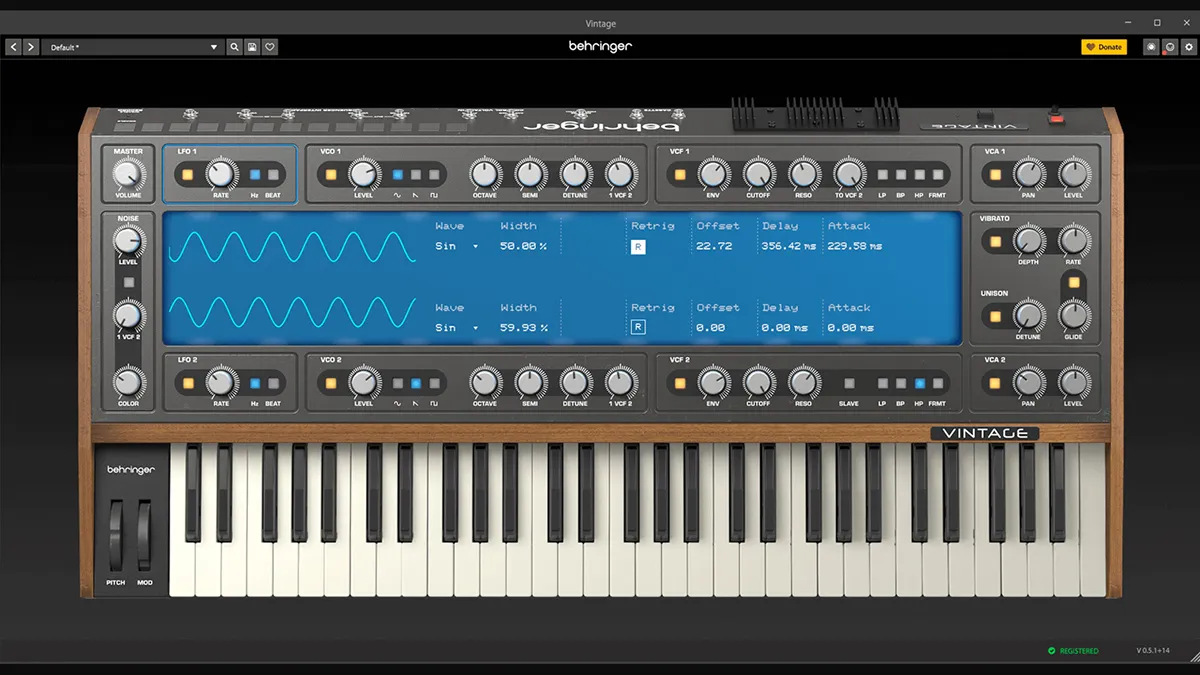
Modulate Filter and Amplitude When
Creating Vibrato Moving the mod wheel or
using aftertouch to induce vibrato—whether
slow and acoustic-like or super-fast and ’80s
electronic-style—is a great way to give lead
lines greater expression. Vibrato is, of course,
pitch modulation. But in the real world, when
you bend a guitar string up and down or slide
back and forth on a violin string, the tone and
volume change as well.
Add just a bit of filter modulation to
subtly change the tone and a bit of amplitude
modulation to subtly change the volume at the
same rate, preferably from the same source
LFO as the pitch modulation. This will give
you more interesting and more life-like vibrato.
Process Your Effect Sends Whether in
a synth or a DAW, you can give your effects a
completely new character by pre-processing
the Send. For example, using a send, put a
distortion effect before a reverb effect. Now
you can compress, soft clip, overdrive, and even
aggressively distort the signal that is being sent
to the reverb. This will make the reverb effect
more dramatic and pronounced. Note that
you’re only distorting the send and not the dry
sound itself, so your source will still sound clean
and beautiful. Try adding chorus before a reverb
or echo to make the effect “spin” a bit.
—Erik Norlander, synthesist/composer/sound
designer (Asia featuring John Payne, Big Noize)
Tailor Your Sounds to the Situation It’s
important to fit your sound design approach
to the gig, rather than sticking with whatever
sounds good at home when you’re programming.
What I’ve learned from playing with a loud
band is that things that sound really warm when
you’re programming will be too dark onstage.
Take, for example, an electric piano sound that
has a string patch behind it. The strings may
sound warm and work great for a club gig that’s
at a low volume, but when I get onstage using
that same sound with Santana, suddenly I can’t
hear the strings anymore; the electric piano
drowns it out because the sound environment is
very different. It’s something to be aware of, so
keep an open mind and be ready to be challenged
when creating your sound palette.
—Dave Mathews, keyboardist (Santana,
Tower of Power, Etta James)
Hard Pan Out of Phase Electronic sounds
can sound sterile and dry, so I look for ways to
add color and dynamics. By dynamics, I mean
soft, subtle changes. Tape simulators work well
in that regard, as do plug-ins like the SansAmp.
One trick that I do with my Buchla Music
Easel, which works with any synth, is to pan a
sound hard left and right, but put the signal in
each speaker out of phase from the other. The
result is unique but doesn’t clutter the mix. Then
I might add spatial modulation to move the
signal from side to side, often using randomly
generated CVs to make it unpredictable.
—Joe Guido Welsh, writer/producer/multiinstrumentalist
(Thelonious Moog)
Modular Balancing Act When recording
modular synths, noise becomes an issue. This
is mainly due to the fact that they use a ton
of patchcords and typically have unbalanced
audio I/O, while most pro-audio interfaces are
balanced. To address this issue, I use Cwejman
AI-2 modules, which offer two channels of
audio interface with unbalanced 3.5mm jacks
on one end and XLRs on the other. This lets
me patch to the modular right into a balanced
patchbay so that I can digitally bus to it from
Pro Tools. When more isolation is necessary, I
will stick a Jensen Transformer DM2-2XX in
the path, which transformer-isolates the signal.
—Gary Chang, film composer/sound artist
Gino Robair is a former editor of
Electronic Musician.
Print Page